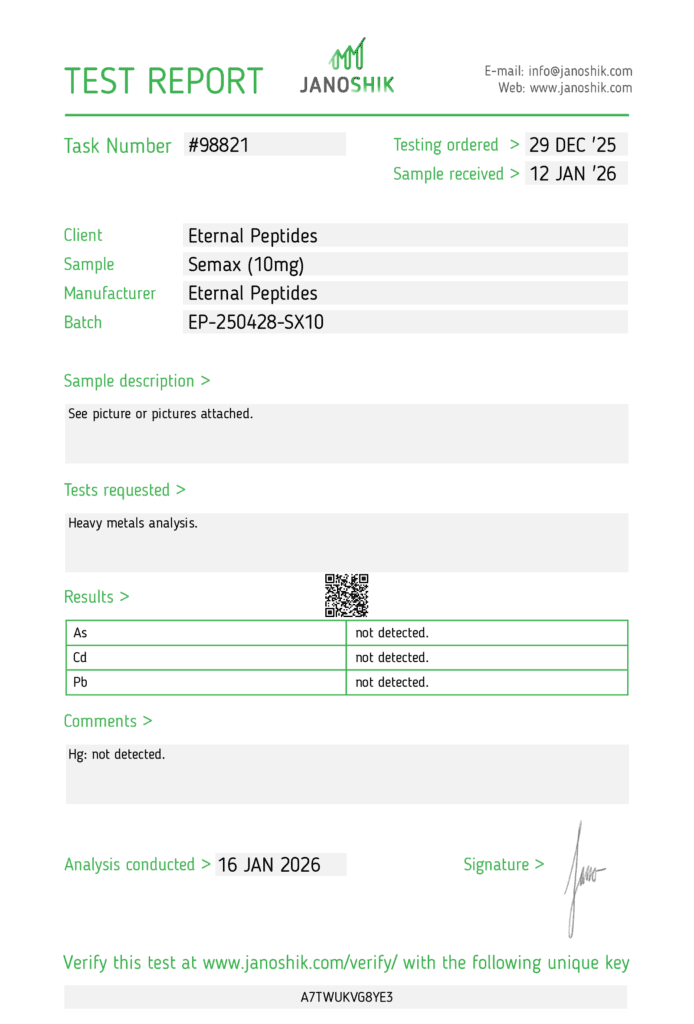
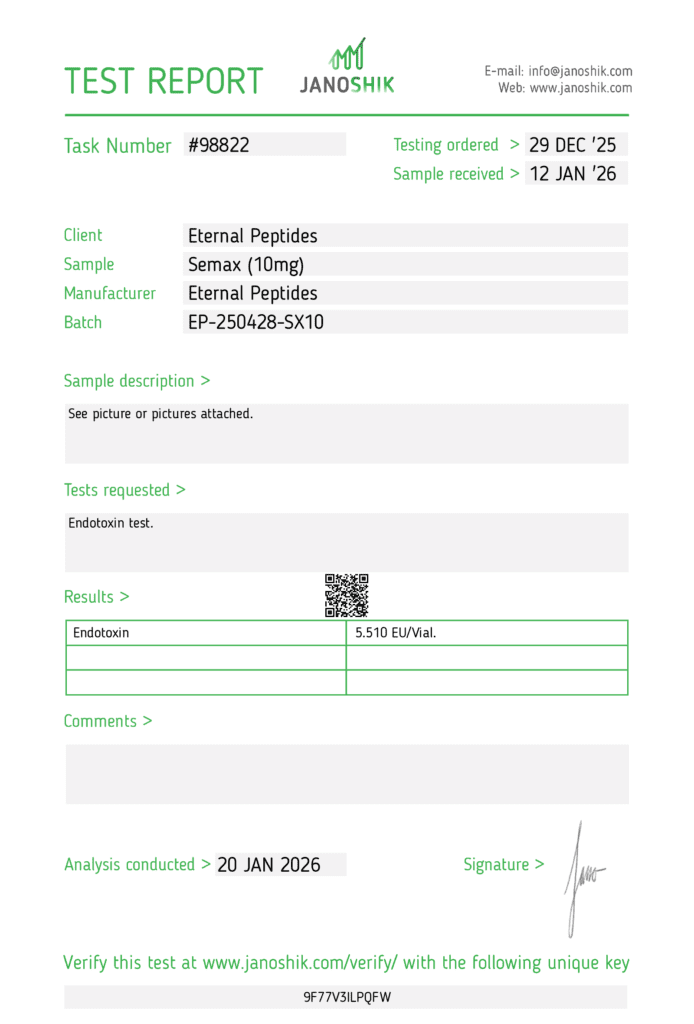
All products are handled with strict quality standards to ensure consistent research-grade excellence.
Our checkout is SSL encrypted and completely secure.
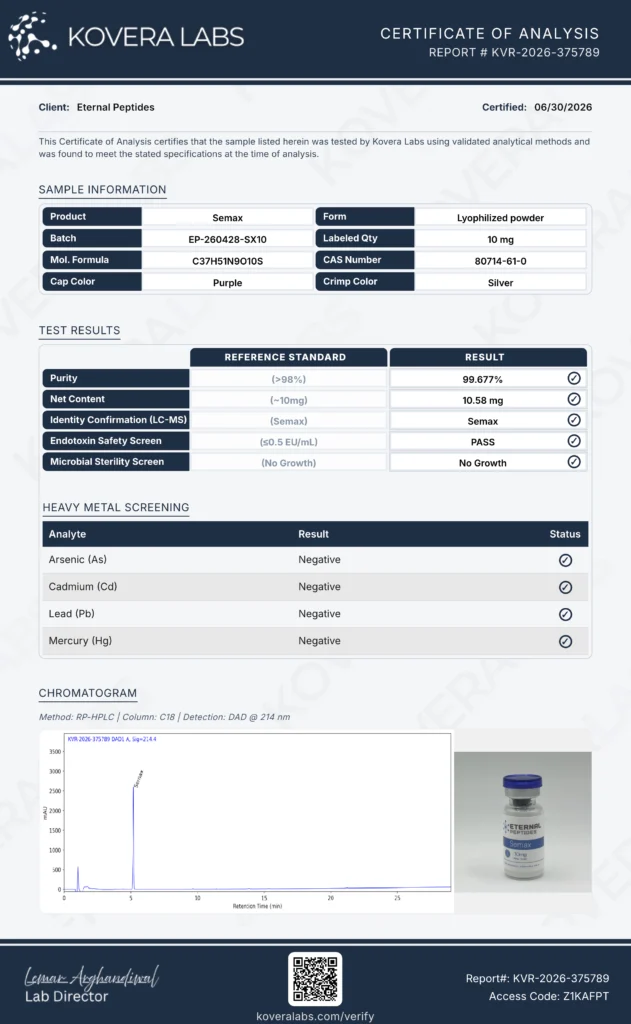
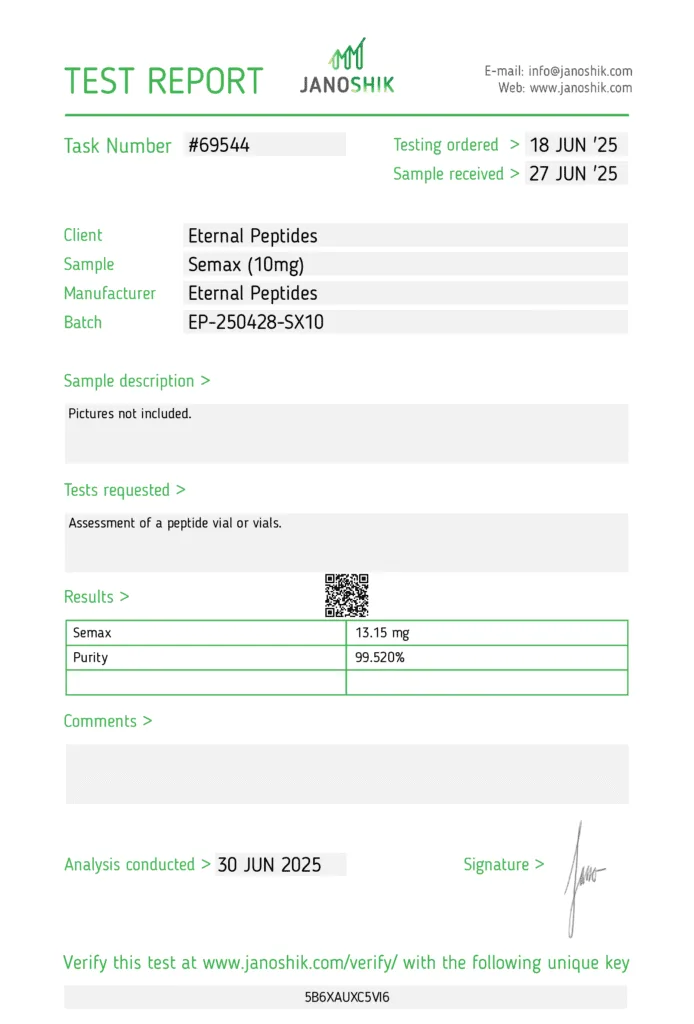
Our products are verified by independent third party laboratories to meet quality standards.
All product batches and lots are assigned unique identifiers and tied to publicly posted lab reports.
We are committed to helping our customers. If you have any questions or concerns, please reach out through our Contact Us page.
$34.99 – $54.99Price range: $34.99 through $54.99
| Quantity | Discount | Price |
|---|---|---|
| 5 - 10 | 5% | $52.24 |
| 11 - 20 | 10% | $49.49 |
| 21+ | 15% | $46.74 |
Every batch of our research chemicals and peptides undergoes third-party testing.
*Disclaimer: This product is intended solely for laboratory research purposes. It is not suitable for consumption by humans, nor for medical, veterinary, or household purposes. Kindly review our Terms & Conditions before making a purchase.
Always quality-tested, verified with third party COA’s
At every step, we prioritize quality by conducting rigorous third-party testing on all our products. These tests focus on five key characteristics- identity, purity, sterility, and endotoxin levels, and heavy metal content-ensuring that each product meets the highest standards of quality with independent third-party Certificates of Analysis (COAS) to verify our commitment to excellence.
*Disclaimer: This product is intended solely for laboratory research purposes. It is not suitable for consumption by humans, nor for medical, veterinary, or household purposes.Kindly review our Terms & Conditions before making a purchase.
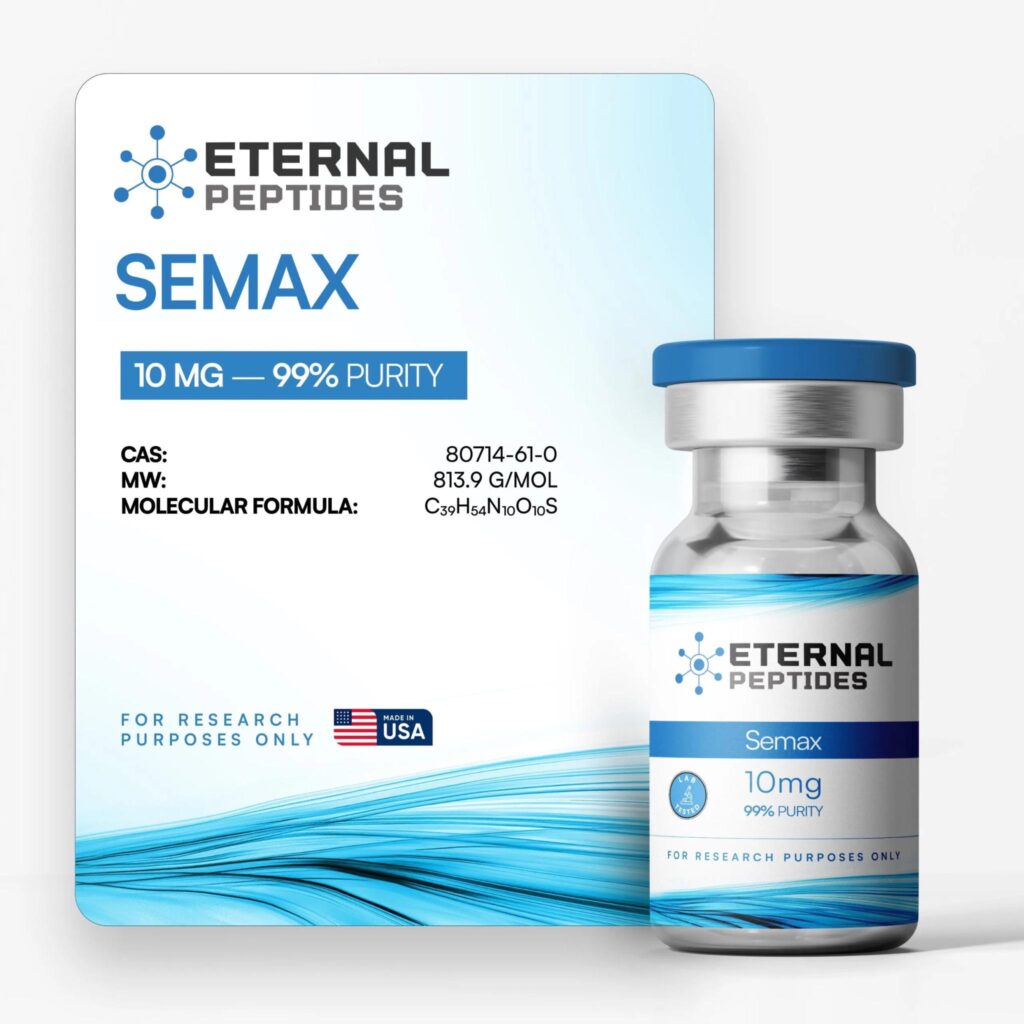
Order Semax 10mg from Eternal Peptides, a trusted and reliable supplier of research-quality peptides in the US. Our high-purity Semax peptide is verified by leading labs with certificates of analysis available. Semax is a synthetic peptide designed for research in cognitive enhancement and neuroprotection studies, including memory boosting and improved focus. Get competitive prices and enjoy secure, discreet shipping with dedicated 24/7 support. Semax is sold for research use only.
Semax is a synthetic heptapeptide (seven amino acids) originally developed in Russia during the 1980s by the Institute of Molecular Genetics at the Russian Academy of Sciences.
Structurally, semax consists of the amino acid sequence Met-Glu-His-Phe-Pro-Gly-Pro and is designed as a stable analogue of the naturally occurring adrenocorticotropic hormone (ACTH) fragment ACTH(4-10). Unlike its endogenous counterpart, Semax resists rapid enzymatic degradation, allowing for extended biological activity in experimental models.
The scientific literature primarily investigates Semax for its nootropic and neuroprotective properties, with research focusing on cognitive enhancement, neuroplasticity, BDNF (brain-derived neurotrophic factor) upregulation, and potential therapeutic applications in stroke, traumatic brain injury, and neurodegenerative conditions.
Most published findings on Semax derive from in vitro studies and animal models, particularly rodent research, though some preliminary human clinical data exists in Russian medical literature. Semax demonstrates high aqueous solubility and exceptional stability in solution, making it ideal for controlled research applications requiring consistent dosing and reliable reconstitution. Its synthetic nature ensures batch-to-batch uniformity critical for reproducible experimental outcomes.
Semax exerts its effects through multiple interconnected neurobiological pathways, primarily involving neurotrophic factor modulation, monoaminergic system regulation, and gene expression alterations in the central nervous system[1].
Research indicates that the peptide influences brain-derived neurotrophic factor (BDNF) expression, modulates dopaminergic and serotonergic activity, and affects the expression of genes involved in neuroplasticity and cellular stress responses. Animal studies have demonstrated enhanced cognitive performance, improved memory consolidation, and neuroprotective effects following ischemic injury in rodent models[2].
Similarly, cellular assays reveal increased neuronal survival under oxidative stress conditions and enhanced synaptic plasticity markers. These mechanistic actions appear to occur without significant direct receptor binding, suggesting Semax functions through indirect modulatory effects on neuronal gene transcription and neurotransmitter systems rather than classic receptor-ligand interactions.
Semax significantly increases brain-derived neurotrophic factor (BDNF) mRNA and protein levels in various brain regions, particularly the hippocampus and frontal cortex, as demonstrated in rodent studies[1][3]. This upregulation promotes neuronal survival, dendritic branching, and synaptic plasticity, which are fundamental processes underlying learning and memory formation.
The peptide appears to activate BDNF gene transcription through mechanisms involving the TrkB receptor pathway, though it does not directly bind to this receptor. Animal models of cognitive impairment show that Semax administration correlates with improved spatial memory performance and enhanced long-term potentiation, electrophysiological markers of synaptic strengthening[4].
Additionally, increased BDNF expression contributes to the peptide’s observed neuroprotective effects in stroke models, where enhanced neurotrophic support facilitates functional recovery and reduces infarct volumes in experimental cerebral ischemia.
Semax influences dopaminergic, serotonergic, and noradrenergic neurotransmitter systems, though the precise mechanisms remain under investigation. Rodent studies reveal increased dopamine and serotonin metabolism in the striatum, hippocampus, and hypothalamus following Semax administration, with corresponding changes in metabolite levels such as DOPAC and 5-HIAA[5].
These alterations suggest enhanced neurotransmitter turnover rather than simple concentration increases. The peptide appears to modulate monoamine oxidase activity and may influence presynaptic release mechanisms or reuptake processes. Behavioral studies link these neurochemical changes to improved attention, reduced anxiety-like behaviors, and enhanced stress resilience in animal models.
Notably, Semax does not produce the tolerance or dependency patterns associated with direct dopaminergic agonists, suggesting a more nuanced regulatory effect on endogenous neurotransmitter balance rather than pharmacological receptor activation.
Transcriptomic analyses in rodent brain tissue reveal that Semax significantly alters the expression of genes involved in cellular stress responses, antioxidant defense, and neuroplasticity[6]. The peptide upregulates genes encoding antioxidant enzymes such as superoxide dismutase and catalase, enhancing cellular resistance to oxidative damage.
Semax also modulates the expression of immediate early genes like c-Fos and c-Jun, which regulate neuronal activation and adaptive responses. In ischemic stroke models, Semax administration reduces expression of pro-apoptotic genes while increasing anti-apoptotic factors, contributing to reduced neuronal death in penumbral regions[6].
These gene expression changes occur relatively rapidly, within hours of administration, and persist for extended periods. The peptide’s influence on hypoxia-inducible factor (HIF) pathways may explain some neuroprotective effects, as cellular assays demonstrate improved neuronal survival under hypoxic conditions following Semax treatment.
While preclinical research on Semax demonstrates consistent mechanistic effects across multiple in vitro and animal model systems, controlled human clinical evidence is limited, with most clinical data originating from Russian medical literature that may not meet current international standards for randomized controlled trials.
The majority of mechanistic insights derive from rodent studies, and direct translation of dosing, efficacy, and safety profiles to human physiology cannot be assumed. Researchers should interpret these findings within a preclinical context and recognize that observed effects in animal models require validation through rigorous human clinical investigation before any therapeutic applications can be established.
Current evidence supports Semax as a valuable research tool for investigating neuroprotective mechanisms and cognitive enhancement pathways but does not constitute clinical proof of efficacy in human populations.
Semax has attracted significant research interest across multiple domains of neuroscience, particularly in studies examining cognitive function, neuroprotection following ischemic injury, stress adaptation, and attention regulation.
These applications emerge from observations in rodent models, cellular assays, and limited preliminary human studies conducted primarily in Russian research institutions. It is important to note that these findings represent preclinical research outcomes and do not imply any established human therapeutic benefits or veterinary applications.
Semax is not approved by regulatory agencies such as the FDA for medical use, and Eternal Peptides does not promote, advocate for, or support any human consumption or clinical applications of this compound.
Animal studies demonstrate that Semax administration improves performance on spatial learning tasks, object recognition tests, and memory consolidation paradigms in rodent models.
Research using Morris water maze and passive avoidance tests shows reduced latency times and improved retention in both healthy animals and those with induced cognitive impairments[7]. Electrophysiological studies reveal enhanced long-term potentiation in hippocampal slices, suggesting strengthened synaptic connections underlying memory formation.
These effects appear dose-dependent and correlate with increased BDNF expression in memory-associated brain regions. The cognitive improvements persist beyond the acute administration period, indicating potential lasting neuroplastic changes rather than transient stimulant effects.
In simpler terms, Semax helps lab animals learn faster and remember information longer in standard memory tests, with brain tissue showing stronger connections between nerve cells that support learning processes.
Stroke research models reveal that Semax administration, particularly when given shortly after induced cerebral ischemia, significantly reduces infarct volume and improves functional recovery in rodents[1].
Studies using middle cerebral artery occlusion demonstrate reduced neuronal death in penumbral regions, decreased inflammatory marker expression, and enhanced motor function recovery compared to control groups.
The peptide appears to extend the therapeutic window for intervention, showing protective effects even when administered several hours post-injury. Mechanisms include reduced oxidative stress, decreased excitotoxicity, and improved cerebral blood flow regulation. These neuroprotective effects have been observed across multiple ischemia models, including both permanent and transient occlusion paradigms.
In other words, when laboratory animals experience stroke-like brain injuries, Semax treatment reduces the amount of brain tissue damage and helps them recover movement and function more effectively than untreated animals.
Behavioral studies utilizing chronic stress paradigms demonstrate that Semax reduces anxiety-like behaviors in rodents exposed to various stressors, including restraint stress, social defeat, and unpredictable chronic mild stress protocols[8].
Animals receiving Semax show increased exploratory behavior in elevated plus maze tests, reduced freezing responses in fear conditioning experiments, and normalized corticosterone levels compared to stressed controls. The peptide does not appear to produce sedation or motor impairment, distinguishing its effects from traditional anxiolytic compounds.
Research suggests these stress-adaptive effects involve modulation of hypothalamic-pituitary-adrenal axis activity and enhanced serotonergic neurotransmission in limbic structures.
In other words, stressed laboratory animals given Semax show less fearful behavior and explore their environments more confidently, while stress hormone levels return closer to normal without causing drowsiness or coordination problems.
Attention deficit models in rodents demonstrate that Semax improves performance on continuous performance tasks, reduces impulsive responses in delay discounting paradigms, and enhances attentional set-shifting abilities. These effects suggest improved executive function and cognitive flexibility[9].
The attention-enhancing effects correlate with increased dopaminergic activity in prefrontal cortex regions and appear distinct from stimulant-like mechanisms, as they occur without the characteristic motor activation or stereotyped behaviors associated with traditional stimulants.
| Property | Details |
| Name | Semax (Heptapeptide ACTH(4-10) analogue) |
| Sequence | Met-Glu-His-Phe-Pro-Gly-Pro (MEHFPGP) |
| Molecular Formula | C₃₇H₅₁N₉O₁₀S |
| Molecular Weight | 813.9 g/mol |
| PubChem CID | 9811102 |
| Product Form | Lyophilized powder in 20 mg vials |
| Purity | ≥99%, verified via third-party laboratory analysis with lot-specific Certificates of Analysis (COA) available |
| Solubility | Highly soluble in sterile water, bacteriostatic water, or saline solution; recommended reconstitution at 1-2 mg/mL for optimal stability |
| Storage | Store lyophilized powder at -20°C; reconstituted solution stable at 36-46°F (2-8°C) for up to 14 days or -20°C for extended storage |
| Appearance | White to off-white lyophilized powder |
| pH Stability | Stable at physiological pH (6.5-7.5) |
Note: Semax demonstrates exceptional stability compared to endogenous ACTH fragments due to its synthetic modifications. The peptide resists enzymatic degradation and maintains structural integrity across a broad pH range, making it suitable for various experimental protocols.
Proper handling and storage of Semax is essential to maintain peptide integrity, purity, and experimental reproducibility throughout research protocols.
Store unopened vials at -20°C (-4°F) in a freezer, protected from light and moisture. Under these conditions, lyophilized Semax remains stable for 24-36 months. Once received, transfer vials immediately to frozen storage and avoid prolonged exposure to room temperature during handling.
Reconstitute Semax using sterile water, bacteriostatic water, or sterile saline solution to achieve the desired concentration, typically 1-2 mg/mL for optimal stability. For the best stability, purity, and consistent results across experimental sessions, get our proven bacteriostatic water with your Semax order.
Allow the lyophilized powder to reach room temperature before adding reconstitution solution, then gently swirl (never shake vigorously) to dissolve completely. Avoid introducing air bubbles or creating foam during reconstitution.
Once reconstituted, Semax should be stored at 2-8°C (36-46°F) for short-term use up to 14 days. For extended storage beyond two weeks, aliquot the solution into single-use portions in sterile cryovials and store at -20°C (-4°F) or -80°C (-112°F). This aliquoting strategy prevents repeated freeze-thaw cycles, which significantly degrade peptide integrity and reduce experimental consistency.
During use, handle Semax using appropriate personal protective equipment including gloves, lab coat, and eye protection. Work within institutional biosafety and chemical handling guidelines. Dispose of unused peptide solutions and materials according to institutional waste management protocols. Maintain proper documentation of peptide handling, storage conditions, and expiration tracking as part of good laboratory practices.
Eternal Peptides provides comprehensive Certificates of Analysis (COAs) for every Semax lot, ensuring complete transparency and traceability for all research applications. Each COA delivers detailed analytical data essential for experimental reproducibility, regulatory compliance, and quality assurance documentation.
Every certificate includes:
Semax is strictly for laboratory research purposes only and is not approved by the FDA or any regulatory authority for human consumption, veterinary use, clinical administration, therapeutic applications, or diagnostic procedures.
The safety and efficacy of Semax in humans have not been established through controlled clinical trials meeting regulatory standards. This product is intended exclusively for qualified researchers operating within institutional review board (IRB) approved protocols and appropriate biosafety frameworks.
Purchasers are solely responsible for ensuring compliance with all applicable federal, state, and local regulations governing research peptides, as well as institutional policies. Eternal Peptides does not condone, support, or provide guidance for any non-research applications of this compound.
https://pmc.ncbi.nlm.nih.gov/articles/PMC11498467/
https://pubmed.ncbi.nlm.nih.gov/17603664/
https://pubmed.ncbi.nlm.nih.gov/18756821/
https://pdfs.semanticscholar.org/2a11/334f12fff603f90a83ef1127e3192ca186b2.pdf
https://link.springer.com/article/10.1023/B:DOBS.0000017114.24474.40
https://pmc.ncbi.nlm.nih.gov/articles/PMC3987924/
https://pmc.ncbi.nlm.nih.gov/articles/PMC12755871/
https://pubmed.ncbi.nlm.nih.gov/16996037/
About the Author:
Dr. Sony Sherpa, MBBS, MD
is a board-certified clinician with a background in emergency medicine and clinical practice. She specializes in medical research analysis, ensuring that product information is grounded in evidence-based medicine and strictly adheres to the latest scientific standards in peptide research and recovery.