All products are handled with strict quality standards to ensure consistent research-grade excellence.
Our checkout is SSL encrypted and completely secure.
Our products are verified by independent third party laboratories to meet quality standards.
All product batches and lots are assigned unique identifiers and tied to publicly posted lab reports.
We are committed to helping our customers. If you have any questions or concerns, please reach out through our Contact Us page.
$74.99 – $139.99Price range: $74.99 through $139.99
| Quantity | Discount | Price |
|---|---|---|
| 5 - 10 | 5% | $71.24 |
| 11 - 20 | 10% | $67.49 |
| 21+ | 15% | $63.74 |
Every batch of our research chemicals and peptides undergoes third-party testing.
*Disclaimer: This product is intended solely for laboratory research purposes. It is not suitable for consumption by humans, nor for medical, veterinary, or household purposes. Kindly review our Terms & Conditions before making a purchase.

Always quality-tested, verified with third party COA’s
At every step, we prioritize quality by conducting rigorous third-party testing on all our products. These tests focus on five key characteristics- identity, purity, sterility, and endotoxin levels, and heavy metal content-ensuring that each product meets the highest standards of quality with independent third-party Certificates of Analysis (COAS) to verify our commitment to excellence.
*Disclaimer: This product is intended solely for laboratory research purposes. It is not suitable for consumption by humans, nor for medical, veterinary, or household purposes.Kindly review our Terms & Conditions before making a purchase.
Purchase the 5mg/5mg BPC 157 + TB 500 blend from Eternal Peptides, the industry leader in high-volume research supplies. This 20mg total Wolverine Blend provides the experimental consistency needed for extended studies, verified at ≥99% purity via Janoshik COAs. We support institutional and individual researchers with full batch traceability and responsive 24/7 service. Order now for fast, discreet US shipping and free delivery on all purchases over $200.
The BPC 157 + TB 500 blend, also known as the Wolverine blend, combines two synthetic research peptides: BPC-157 and TB-500. BPC-157 is a stable pentadecapeptide originally identified as part of a gastric protein complex, while TB-500 is a synthetic fragment of thymosin beta-4 comprising the active actin-binding domain.
Both peptides have been extensively studied in preclinical settings for their roles in cellular repair processes, angiogenesis, and modulation of inflammatory pathways.
In current research, this blend is being investigated for its potential synergistic effects on tissue healing, including tendon, muscle, and soft-tissue recovery, as well as vascular stabilization and cytoprotective mechanisms.
That’s because BPC-157 is associated with endothelial signalling and growth-factor modulation, while TB-500 is studied for its interactions with actin dynamics and cell migration. Together, they are often explored for complementary contributions to tissue regeneration models.
Note that most findings come primarily from in vitro experiments and animal studies, with minimal controlled human research available. BPC-157 and TB-500 are not approved for any form of human or animal clinical or therapeutic applications.
According to research and recent studies, the BPC-157 + TB-500 Blend appears to act through multiple coordinated biological pathways, reflecting the pleiotropic nature of both peptides.
Mechanistic insights derived predominantly from in vitro and animal studies explore their roles in cellular repair, angiogenesis, inflammation modulation, and cytoprotection. While the two peptides act independently, their combined use in research models is thought to produce complementary or additive effects on tissue recovery processes.
Preclinical research suggests that BPC-157 may influence angiogenic pathways, particularly those associated with endothelial stability and microvascular repair[1].
These effects are commonly linked to modulation of growth-factor signalling and endothelial nitric-oxide synthase activity. TB-500, through its interaction with actin dynamics, has also been studied for its potential role in promoting vascular remodeling and supporting the formation of new microvessels[2].
Together, these actions may enhance blood flow and nutrient delivery to injured tissues, a key factor in effective tissue repair. Improved microcirculation can support the survival of damaged cells, maintain oxygen delivery, and promote the restoration of functional tissue architecture.
TB-500 is a synthetic fragment of thymosin beta-4, a peptide known for regulating actin polymerization and influencing the movement of cells during repair processes[2]. Studies suggest that TB-500 can support cytoskeletal organization, cell migration, and extracellular-matrix remodeling[3].
BPC-157 has also been investigated for its potential interactions with adhesion-related proteins such as FAK and paxillin, which contribute to cellular migration and tissue restoration[4].
In combination, these peptides may help accelerate the movement of repair cells to injury sites and support the structural restoration of tissues. These processes are fundamental to the healing of muscle, tendon, and connective tissue in experimental models.
Preclinical models indicate that both BPC-157 and TB-500 exert regulatory influence over inflammatory pathways. BPC-157 has been associated with balanced nitric-oxide signalling and attenuation of excessive inflammatory responses[5], while TB-500 has been studied for its potential to reduce pro-inflammatory mediators and support protective cellular environments[6].
By helping to control excessive inflammation, the blend may reduce secondary tissue damage and support a more favorable environment for healing. This type of modulation is often critical in preventing prolonged inflammation that can impair recovery or lead to fibrosis in research models.
BPC-157 has been extensively studied for its effects on gastrointestinal tissues, including protection of the mucosal lining, modulation of lesion formation, and support of barrier integrity in rodent models[7].
Similarly, TB-500 has been explored in organ-protection contexts as well, with studies examining its influence on cellular survival under stress conditions[2].
These findings suggest that the blend may offer a broad spectrum of cytoprotective activity across multiple tissue types in experimental settings. Enhanced resilience of organ tissues under stress can be an important factor in complex injury models, though these effects remain limited to preclinical observations.
| Property | Detail |
| Name | BPC-157 + TB-500 Blend (combination of a stable gastric pentadecapeptide and a synthetic thymosin beta-4 fragment) |
| Components | BPC-157 (15–amino-acid peptide); TB-500 (synthetic fragment corresponding to the active domain of thymosin beta-4) |
| Sequence | BPC-157: Gly-Glu-Pro-Pro-Pro-Gly-Lys-Pro-Ala-Asp-Asp-Ala-Gly-Leu-Val; TB-500: synthetic peptide fragment derived from thymosin beta-4 (exact fragment length varies by formulation) |
| Molecular weight | BPC-157: ~1.4 kDa; TB-500 fragment: ~4.9 kDa (approximate values |
| Formats | Lyophilized powder supplied in 5mg & 10 mg vials (combined peptide blend) |
| Purity | ≥99% per component, verified by lot-specific Certificates of Analysis (COAs) |
| Solubility | Lyophilized powder is soluble in bacteriostatic water or appropriate research buffers following standard laboratory reconstitution protocols |
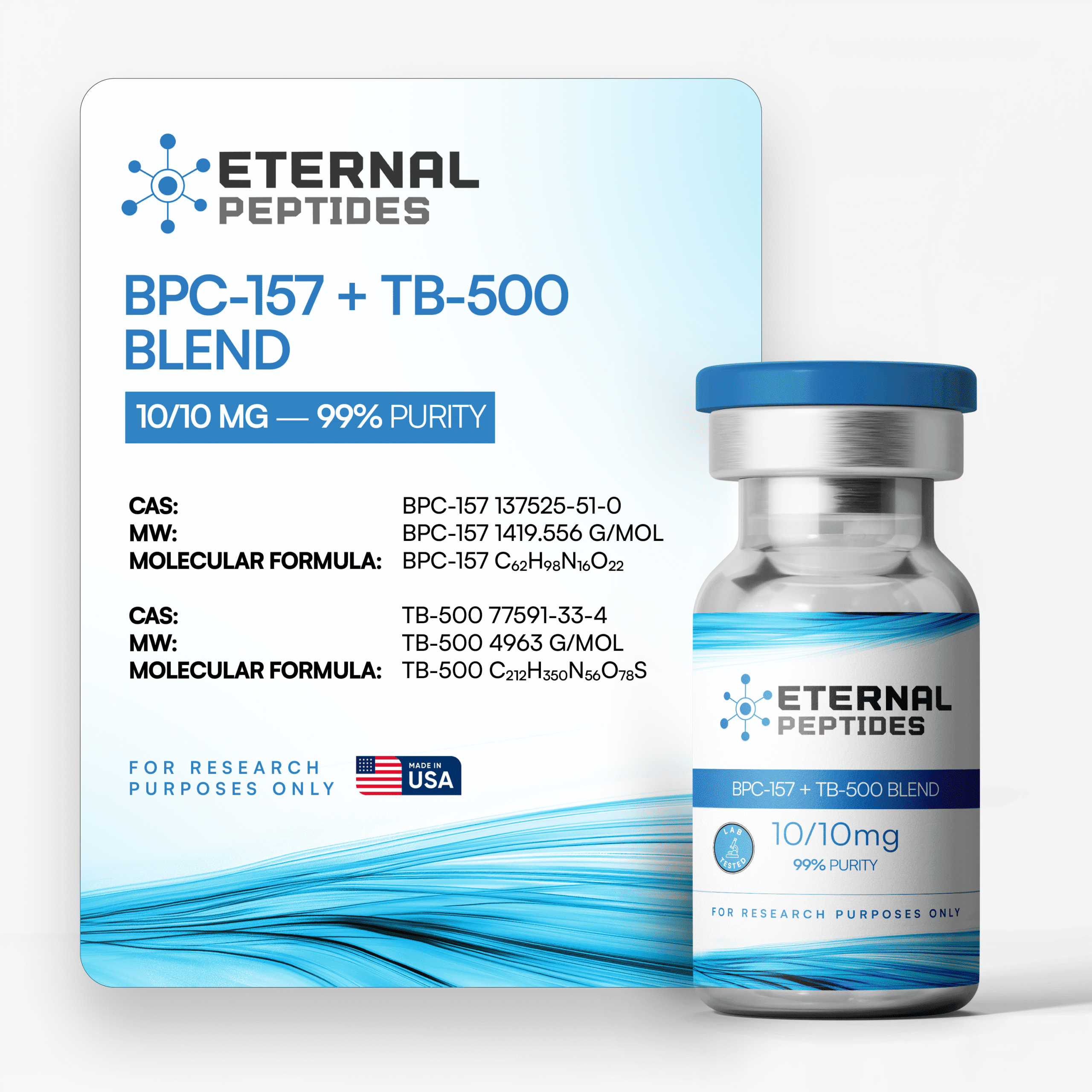
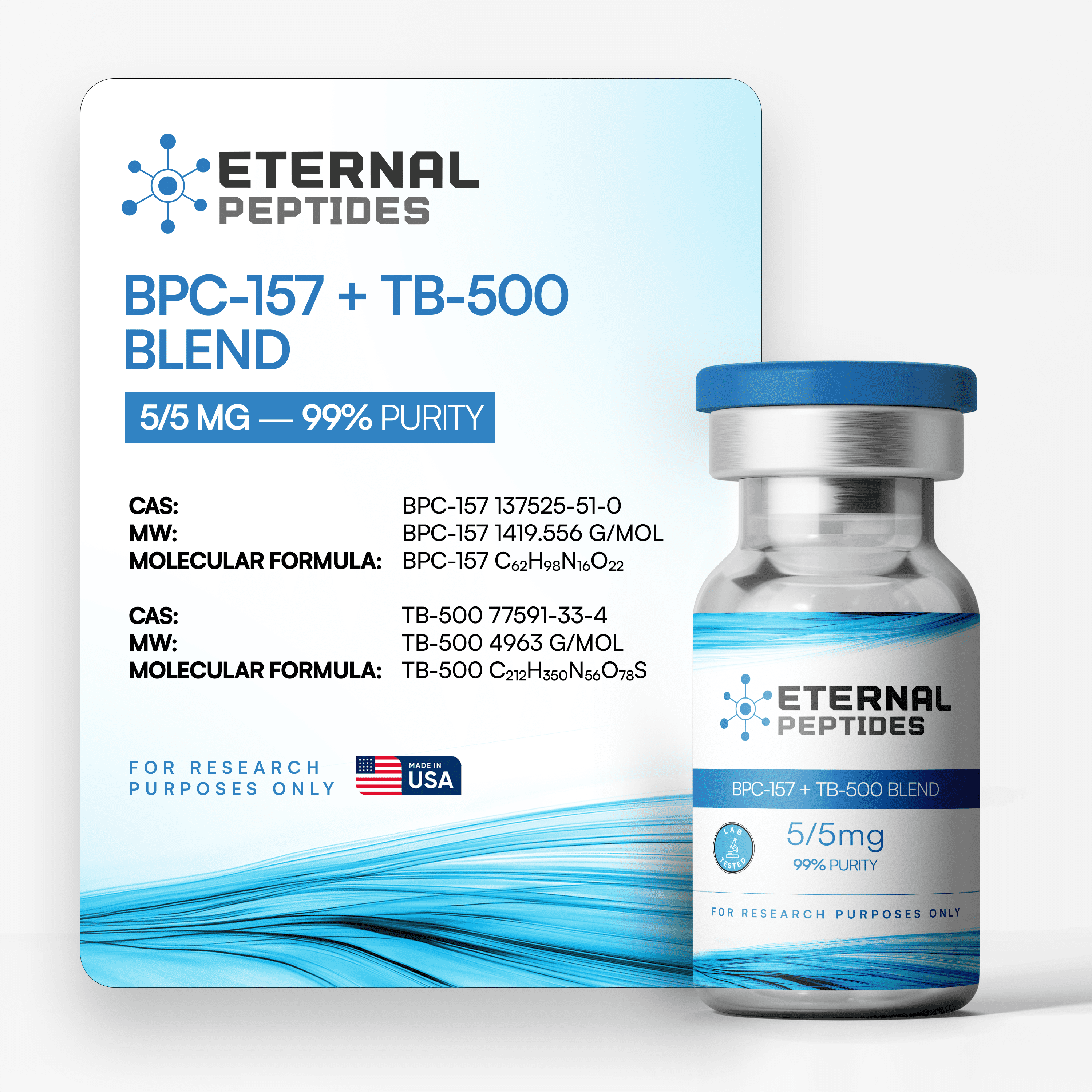
Molecular Formula: C62H98N16O22(BPC-157) & C212H350N56O78S(TB-500)
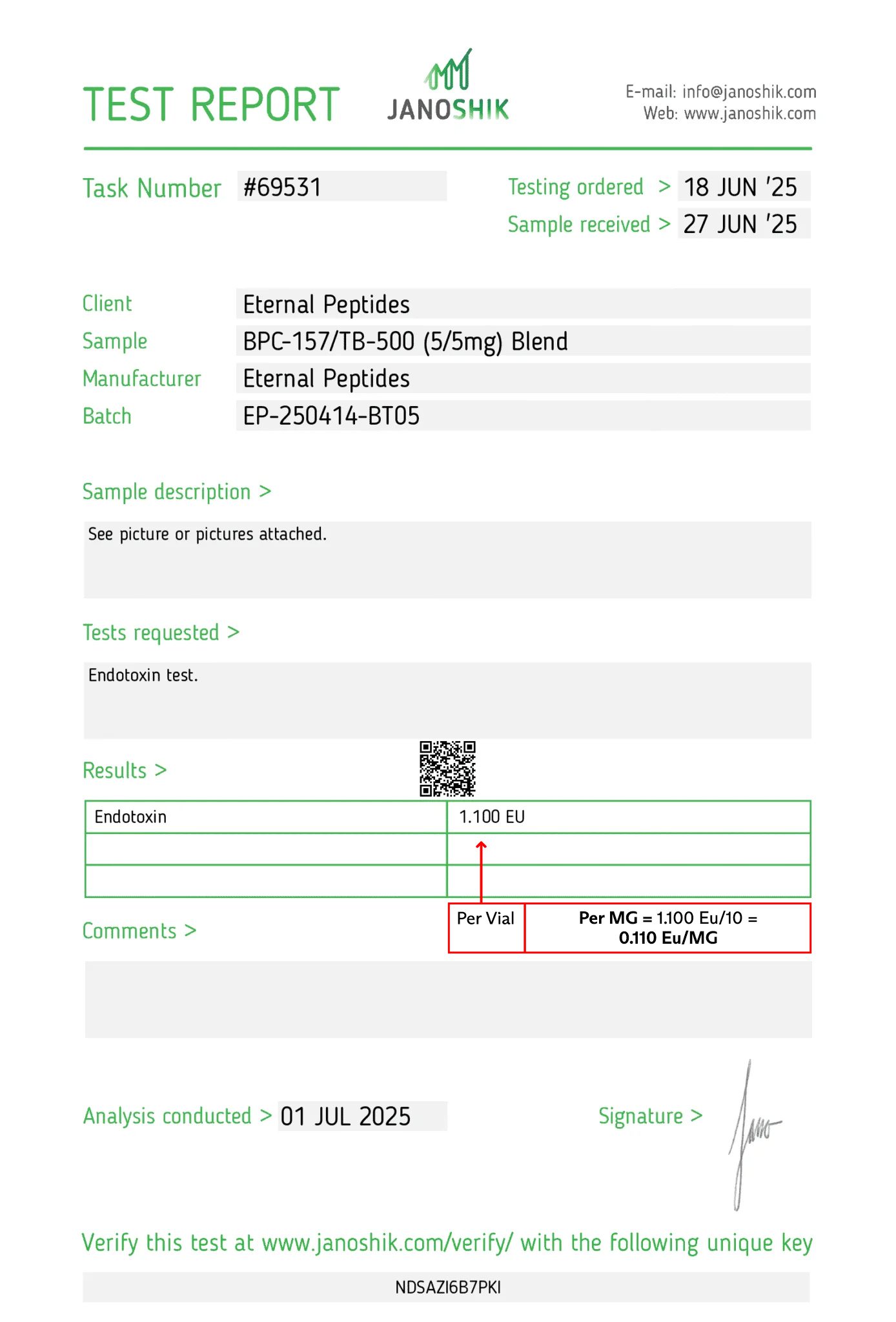
Batch: EP-250414-BT05
Once your order arrives, store the lyophilized BPC-157 + TB-500 Blend at –4 °F (–20 °C), protected from light and moisture, to maintain peptide stability prior to use. Keep vials tightly sealed until reconstitution.
During preparation, reconstitute the lyophilized powder using bacteriostatic water or other approved laboratory-grade solvents appropriate for the intended assay. Gently swirl or invert to dissolve; avoid vigorous shaking, which may degrade peptide structure.
Buy bacteriostatic water right here on Eternal Peptides for best results.
After reconstitution, aliquot the solution into appropriately sized volumes to minimize repeated freeze–thaw cycles as it can reduce peptide integrity and experimental consistency.
Aliquoted working solutions may be stored short term at 39.2 °F (4 °C) when required by protocol, while longer-term storage should be at –112 °F to –4 °F (–80 °C to –20 °C), depending on institutional standards and experimental design.
All handling should follow standard laboratory biosafety practices, institutional operating procedures, and applicable chemical-handling and research-use regulations.
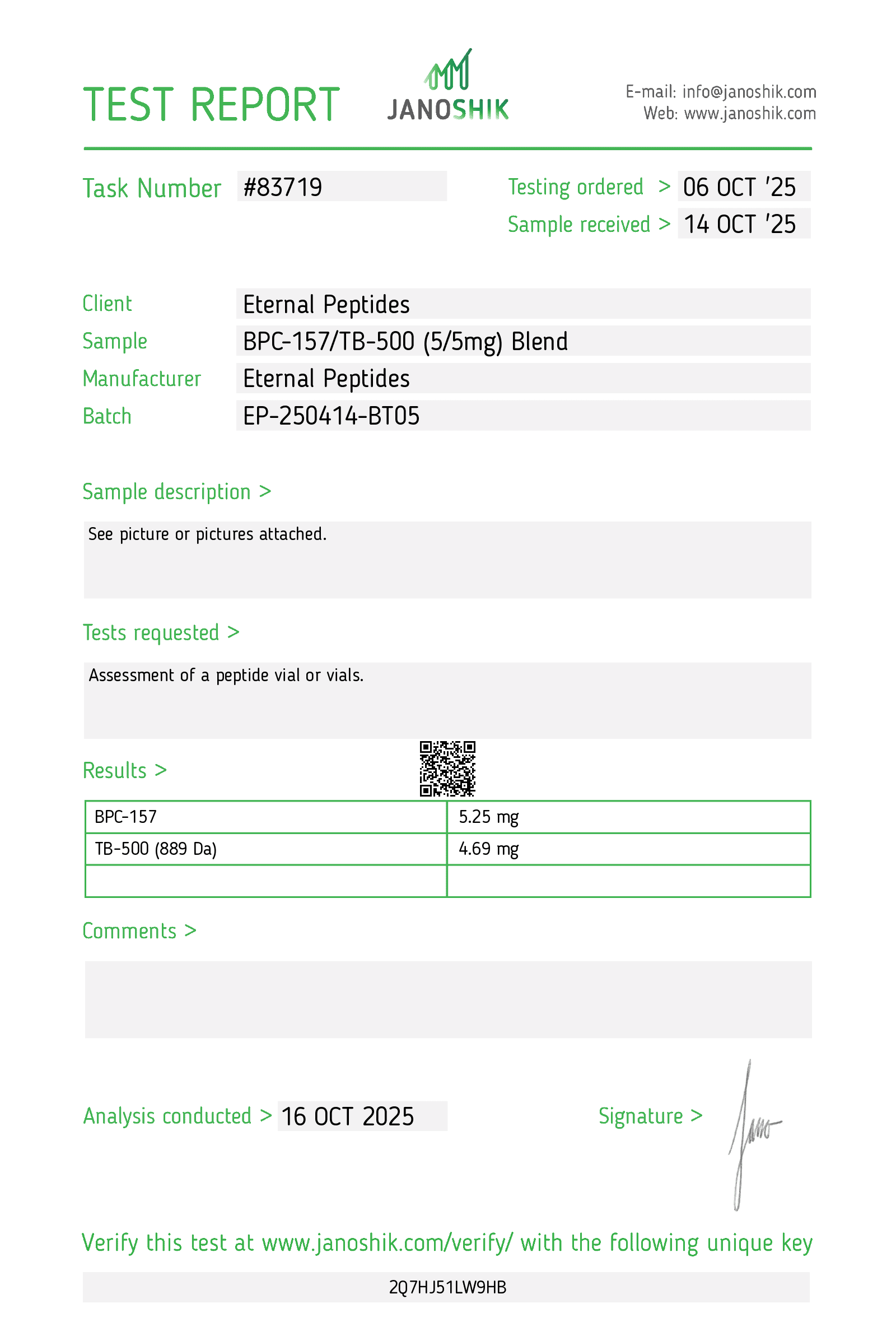
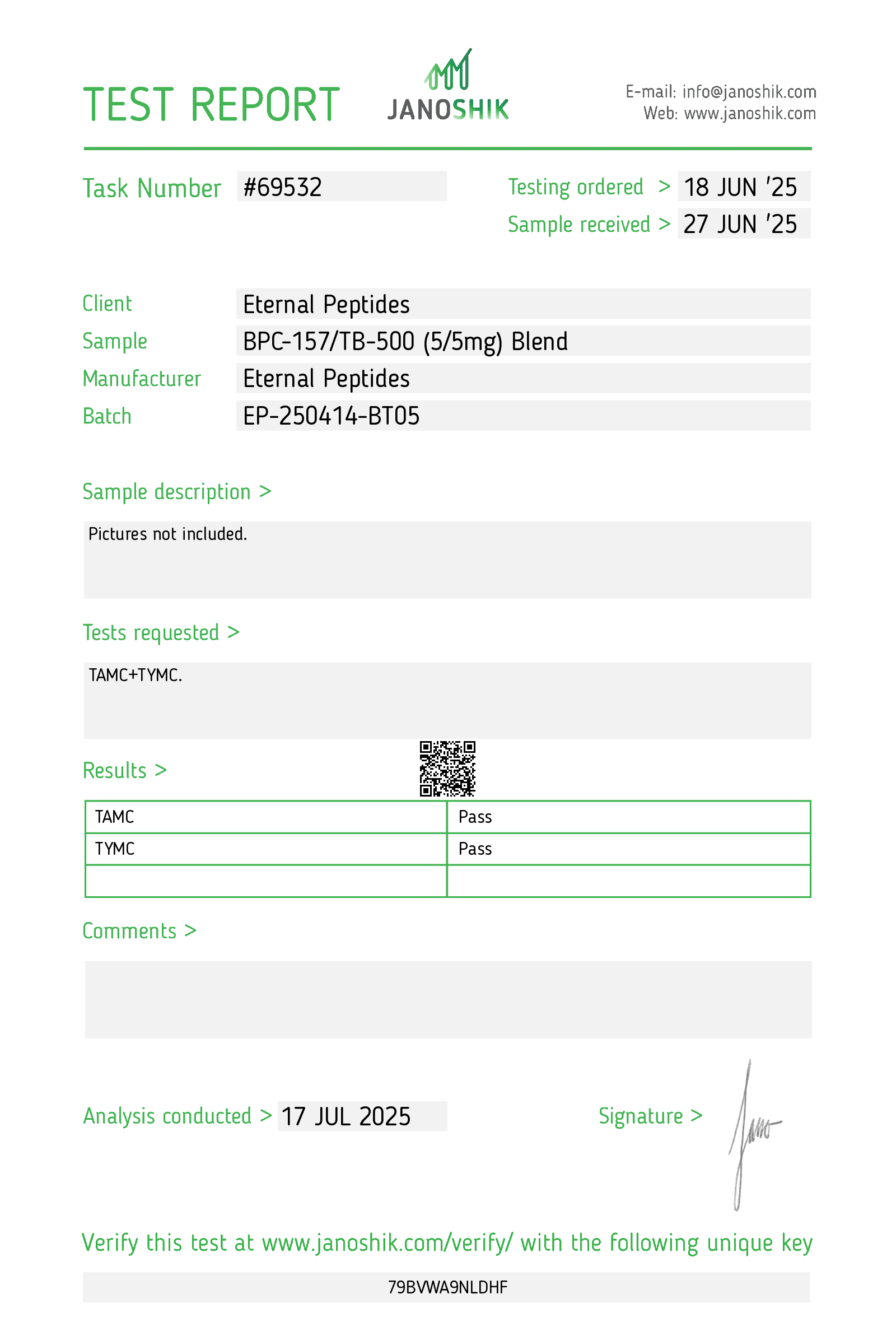
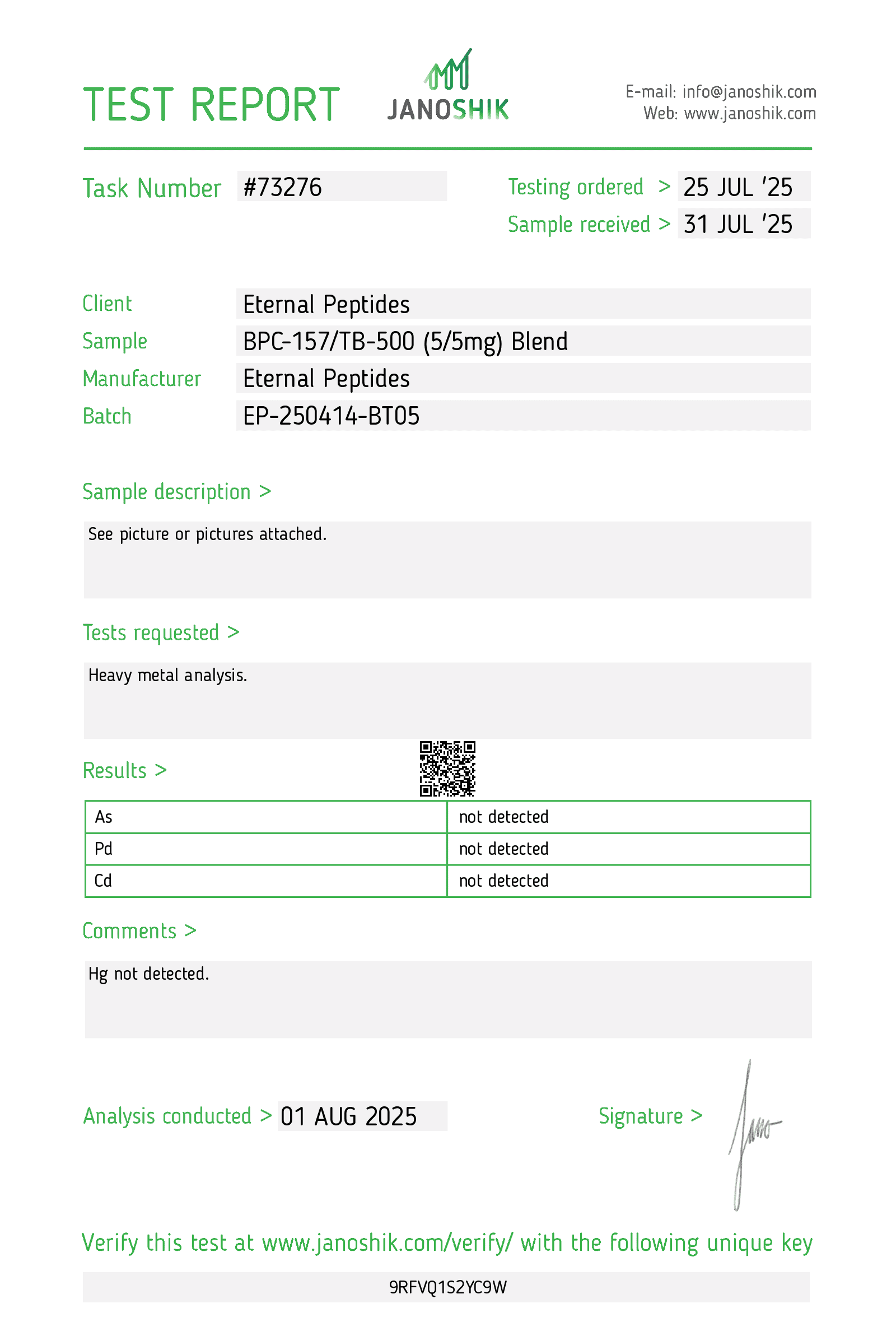
Every lot of the BPC 157 + TB 500 Blend from Eternal Peptides is accompanied by a Certificate of Analysis (COA) to support transparency, traceability, and reproducible research outcomes. COAs are issued on a per-lot basis and are directly linked to the specific batch received, allowing researchers to verify material consistency across experiments.
Each COA typically documents peptide identity confirmed by analytical methods such as high-performance liquid chromatography (HPLC) and/or mass spectrometry, along with quantitative purity results, which are generally ≥99%. Where applicable, reports may also include sterility testing, endotoxin levels, and additional quality parameters relevant to laboratory use, as well as lot-specific storage and handling recommendations.
Eternal Peptides partners with independent, industry-recognized third-party testing laboratories, including Janoshik, to ensure objective and reliable quality verification. All COAs are publicly accessible through the Eternal Peptides Lab Tests page, supporting internal audits, regulatory documentation, and experimental reproducibility in research settings.
The BPC-157 + TB-500 Blend offered by Eternal Peptides is supplied strictly for laboratory research use only. This product is not approved for human or veterinary use and is not intended for clinical administration, therapeutic treatment, or diagnostic procedures. The safety, efficacy, and pharmacological profile of this compound in humans have not been established.
You as the purchasers/users are solely responsible for ensuring compliance with all applicable local, national, and international laws, as well as institutional biosafety guidelines and research-use regulations. Any misrepresentation of intended use or misuse of this product may result in regulatory action or legal consequences.
https://www.mdpi.com/1424-8247/18/2/185
https://pmc.ncbi.nlm.nih.gov/articles/PMC8228050/
https://pmc.ncbi.nlm.nih.gov/articles/PMC2701135/
https://journals.physiology.org/doi/full/10.1152/japplphysiol.00945.2010
https://pmc.ncbi.nlm.nih.gov/articles/PMC12446177/
https://pmc.ncbi.nlm.nih.gov/articles/PMC8228050/
https://pmc.ncbi.nlm.nih.gov/articles/PMC5333585/
About the Author:
Dr. Sony Sherpa, MBBS, MD
is a board-certified clinician with a background in emergency medicine and clinical practice. She specializes in medical research analysis, ensuring that product information is grounded in evidence-based medicine and strictly adheres to the latest scientific standards in peptide research and recovery.