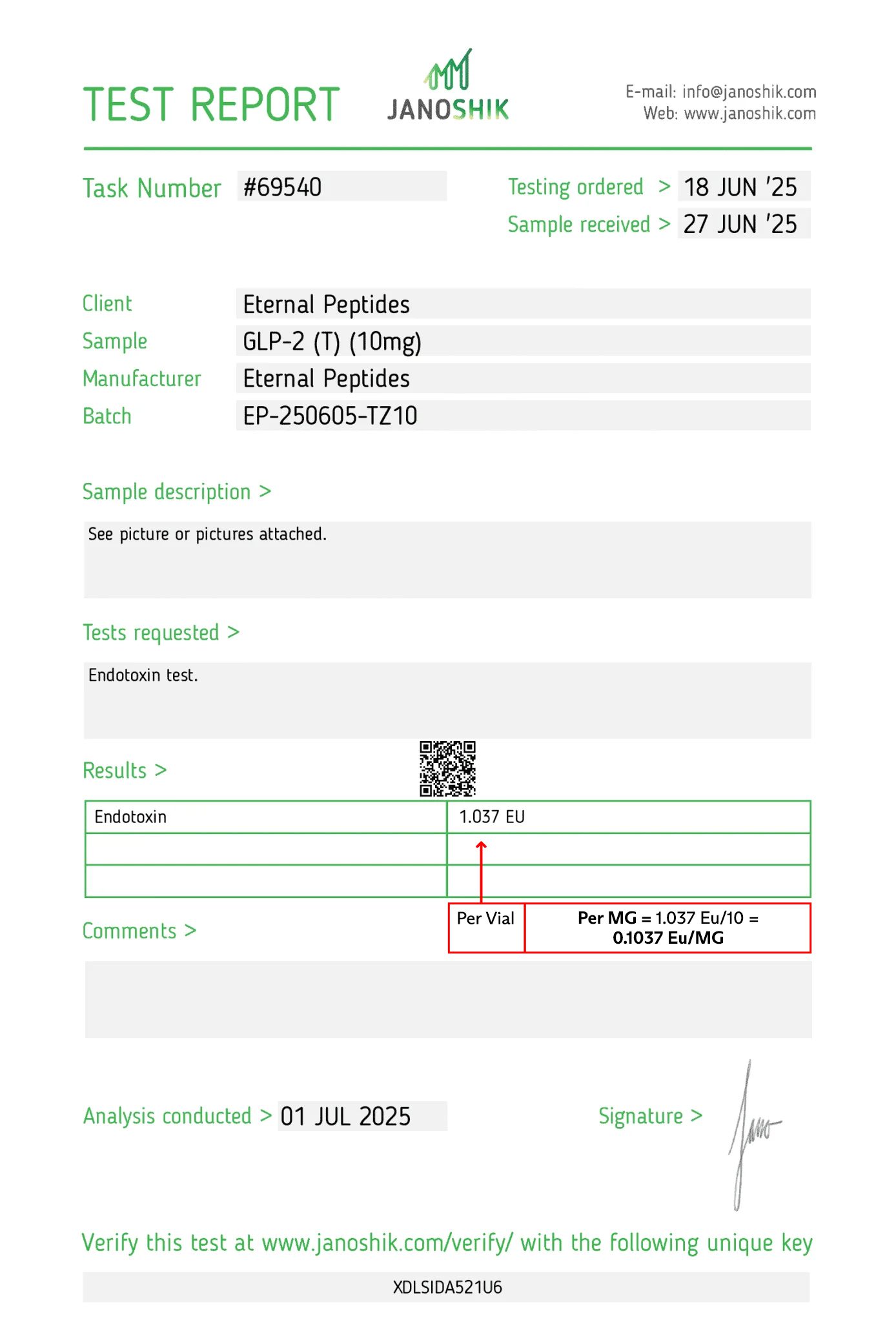
All products are handled with strict quality standards to ensure consistent research-grade excellence.
Our checkout is SSL encrypted and completely secure.
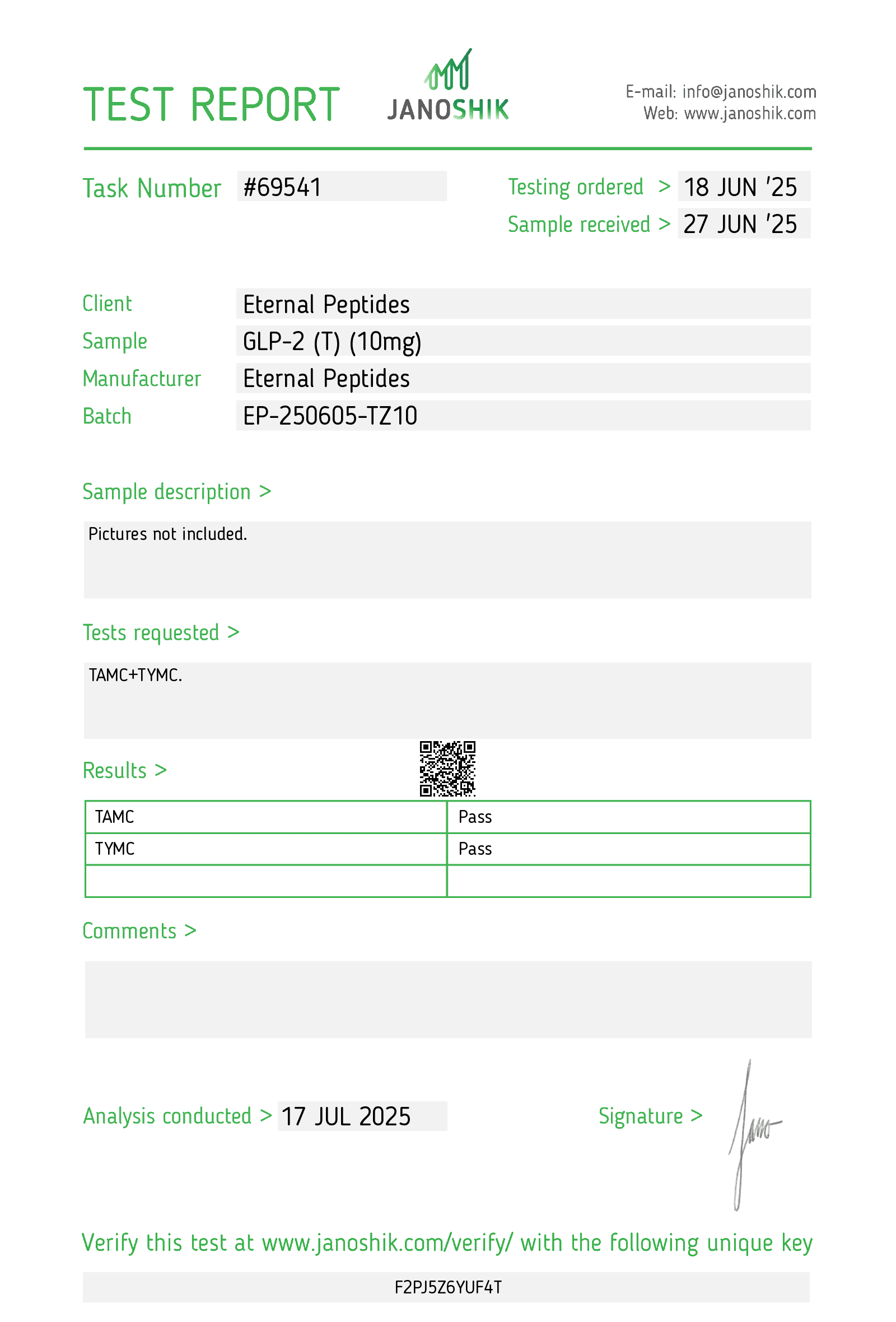
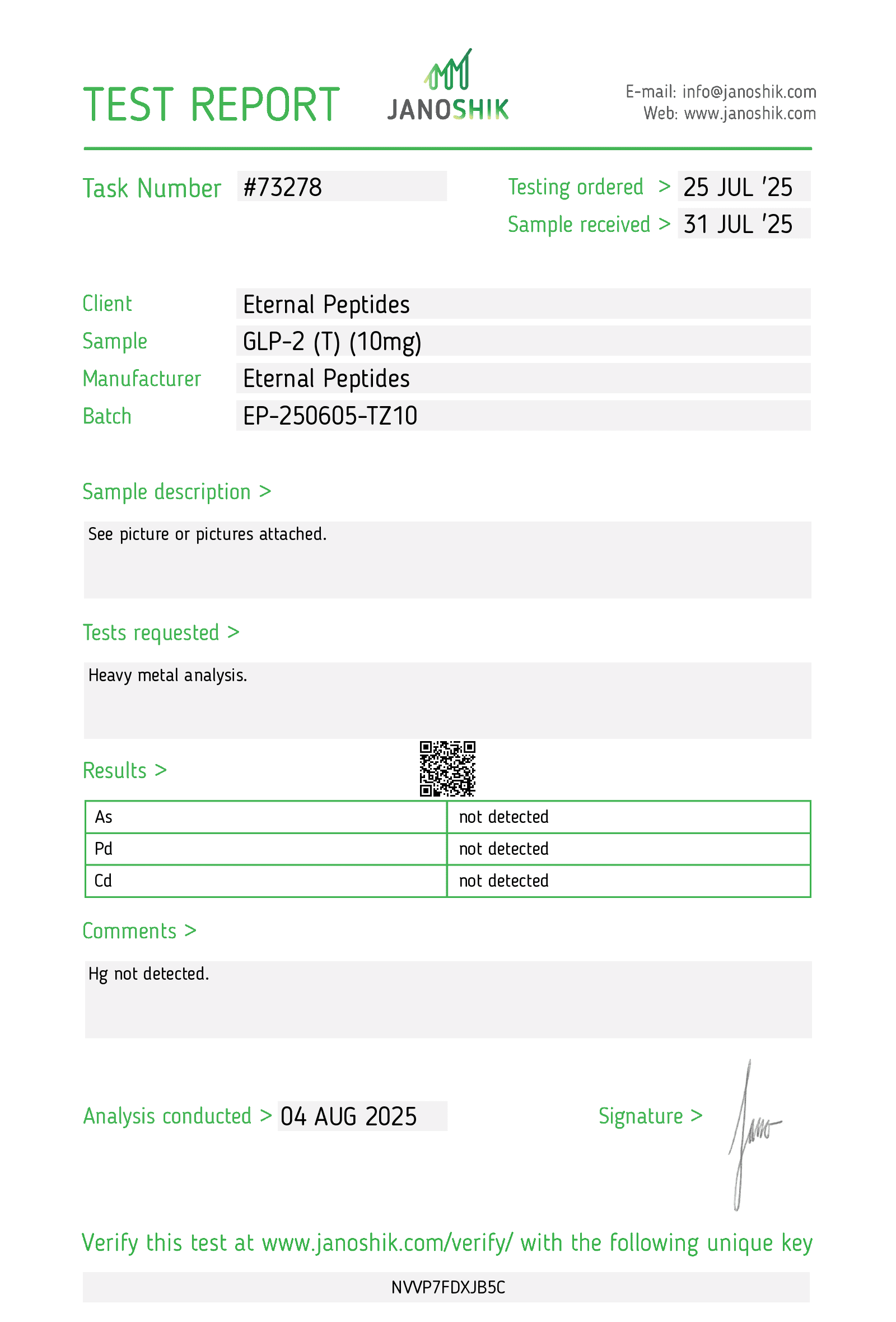
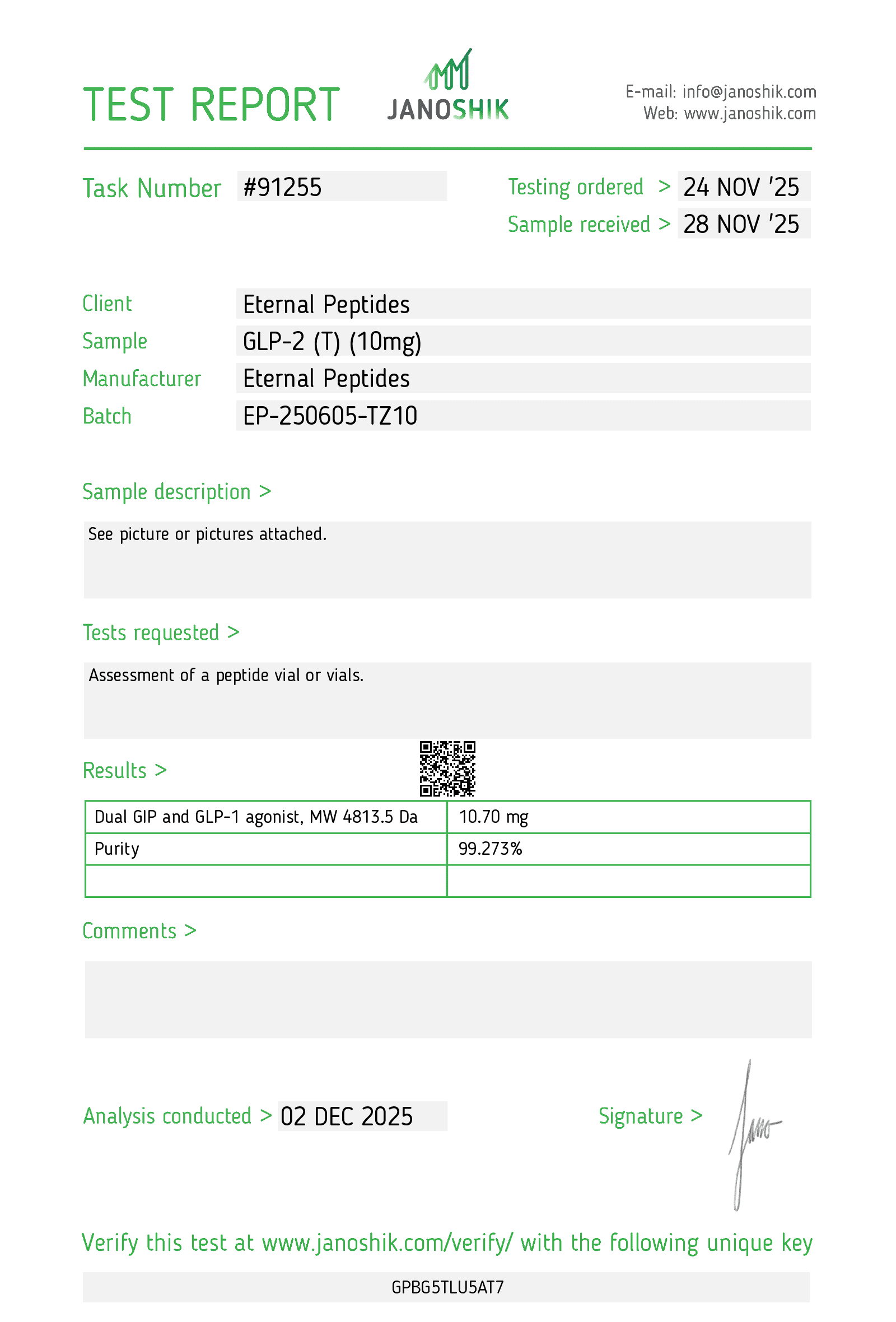
Our products are verified by independent third party laboratories to meet quality standards.
All product batches and lots are assigned unique identifiers and tied to publicly posted lab reports.
We are committed to helping our customers. If you have any questions or concerns, please reach out through our Contact Us page.
$40.99 – $74.99Price range: $40.99 through $74.99
10 in stock
Purchase & earn 75 points!| Quantity | Discount | Price |
|---|---|---|
| 5 - 10 | 5% | $71.24 |
| 11 - 20 | 10% | $67.49 |
| 21+ | 15% | $63.74 |
Every batch of our research chemicals and peptides undergoes third-party testing.
*Disclaimer: This product is intended solely for laboratory research purposes. It is not suitable for consumption by humans, nor for medical, veterinary, or household purposes. Kindly review our Terms & Conditions before making a purchase.

Always quality-tested, verified with third party COA’s
At every step, we prioritize quality by conducting rigorous third-party testing on all our products. These tests focus on five key characteristics- identity, purity, sterility, and endotoxin levels, and heavy metal content-ensuring that each product meets the highest standards of quality with independent third-party Certificates of Analysis (COAS) to verify our commitment to excellence.
*Disclaimer: This product is intended solely for laboratory research purposes. It is not suitable for consumption by humans, nor for medical, veterinary, or household purposes.Kindly review our Terms & Conditions before making a purchase.
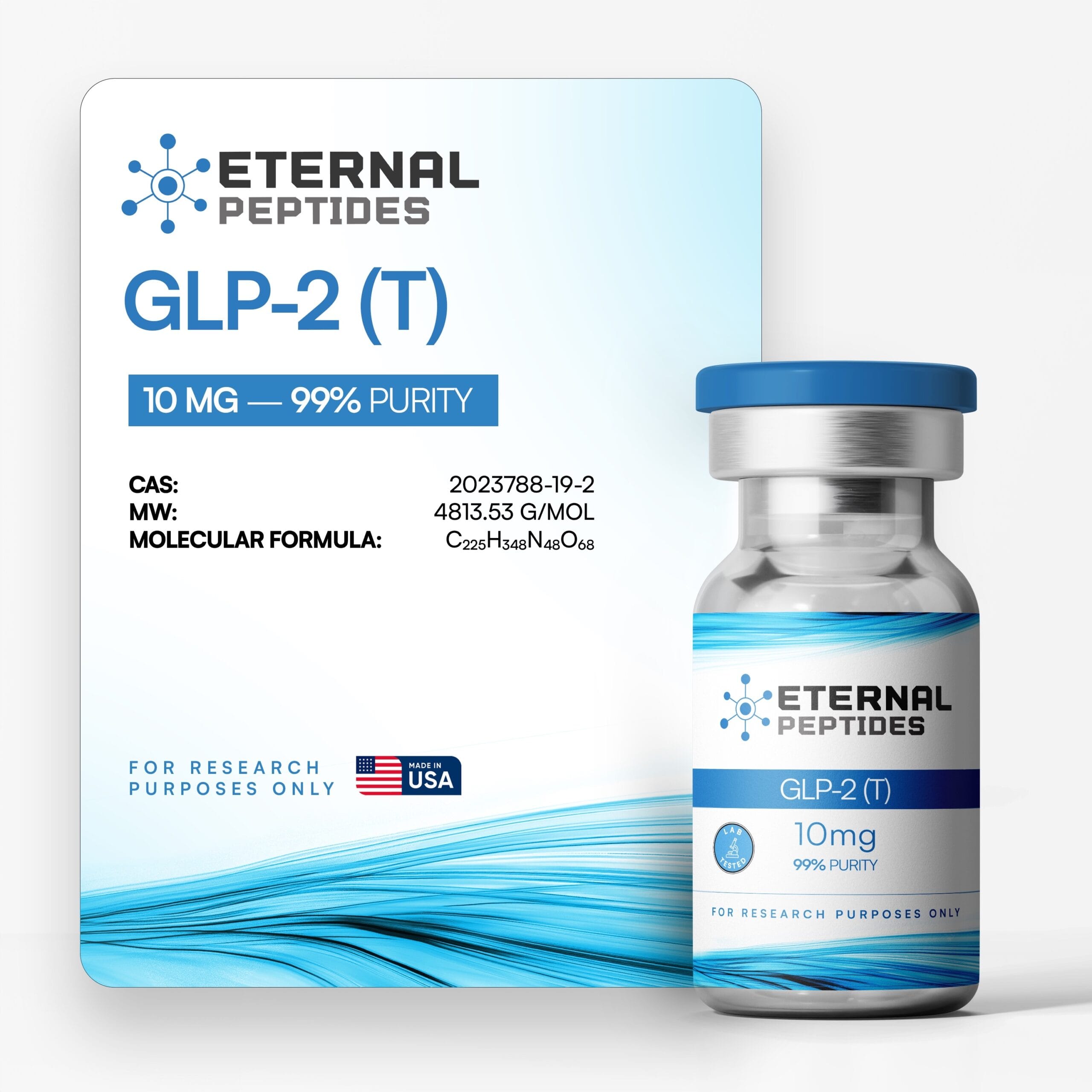
GLP-2 (T) 10mg is a research-grade formulation of glucagon-like peptide-2, studied for its interactions with the GLP-2 receptor in models of gastrointestinal biology, intestinal epithelial function, and mucosal maintenance. Eternal Peptides supplies GLP-2 (T) 10mg as a lyophilized powder, a format chosen for stability during storage and transport. Each batch is independently tested by Janoshik Analytical for purity and identity, with a Certificate of Analysis available for review prior to purchase. Orders are fulfilled promptly and shipped securely via USPS. Sold strictly for research use only.
GLP-2 (T) refers to a stabilized research analogue of glucagon-like peptide-2 (GLP-2), a 33-amino acid peptide hormone encoded within the proglucagon gene and was first characterized in the 1980s and 1990s during investigations into intestinal growth regulation[1].
Proglucagon is expressed in several tissue types, including intestinal L-cells, pancreatic alpha cells, and certain neurons of the brainstem. However, the specific post-translational processing that yields GLP-2 occurs primarily in enteroendocrine L-cells of the small intestine and colon, where it is co-secreted alongside GLP-1 in response to luminal nutrient exposure, particularly fat and carbohydrate.
Native GLP-2 exerts its biological activity through the GLP-2 receptor (GLP-2R), a class B G protein-coupled receptor whose expression is concentrated in the gastrointestinal tract, most notably in intestinal epithelial cells, enteric neurons, and subepithelial myofibroblasts. Receptor activation primarily couples to Gs-mediated elevation of intracellular cyclic AMP (cAMP), which in turn engages downstream mediators including protein kinase A and, in the context of intestinal growth, is thought to involve secondary signals such as insulin-like growth factor-1 (IGF-1) and epidermal growth factor receptor (EGFR) transactivation.
This indirect signaling component is an active area of mechanistic research, as GLP-2R is not uniformly expressed across all cell types that appear to respond to GLP-2 stimulation, suggesting paracrine intermediaries play a meaningful role.
The “T” designation in GLP-2 (T) reflects structural modifications introduced to address a key pharmacological limitation of native GLP-2: rapid degradation by the enzyme dipeptidyl peptidase-4 (DPP-4), which cleaves the N-terminal dipeptide of GLP-2 and renders it biologically inactive within minutes in circulation[2].
The modifications incorporated into stabilized GLP-2 analogues are designed to confer resistance to this enzymatic cleavage, substantially extending the functional half-life relative to the native peptide and making it more suitable for experimental paradigms requiring sustained receptor engagement.
GLP-2 (T) is studied as an agonist of the GLP-2 receptor (GLP-2R), with research focused on how that activation reshapes intestinal growth, structure, and function.
What makes GLP-2 signaling particularly interesting from a mechanistic standpoint is that many of its observed effects on the intestinal lining do not appear to result from the receptor being activated directly on the cells that ultimately respond. Instead, GLP-2R activation triggers a relay of intermediate signals that produce downstream effects in tissues where the receptor itself is not prominently expressed[3].
This indirect, paracrine model of action was a significant conceptual development in the field, emerging from foundational work by Drucker, Brubaker, and colleagues in the 1990s and subsequently refined by Guan and others who helped localize GLP-2R expression to enteric neurons and neuroendocrine cells rather than the epithelial surface itself.
When GLP-2R is engaged, the primary intracellular signal is an increase in cyclic AMP (cAMP), a widely used second messenger that relays the activation signal into the cell and sets downstream events in motion.
In the case of GLP-2, however, the growth-related outcomes observed in preclinical models include increased proliferation of crypt cells, reduced programmed cell death (apoptosis) in the epithelial lining, and expansion of the mucosal surface. These are thought to be largely mediated not by cAMP itself, but by paracrine growth factors released in response to receptor activation.
Two signaling systems frequently discussed in this context are the IGF-1 axis, where locally produced IGF-1 may act on neighboring epithelial cells to drive proliferative responses, and the EGF/ErbB receptor system, where transactivation of epidermal growth factor receptors on epithelial cells has been proposed as an additional intermediary step. The precise contribution of each pathway, and how they interact, remains an active area of investigation.
What this means in practical terms for researchers is that GLP-2’s trophic effects on the intestine are difficult to replicate by simply adding the peptide to isolated epithelial cells in culture. The intact signaling environment, including the neuronal and stromal compartments that express GLP-2R, appears necessary for the full response to emerge.
In rodent models, GLP-2R activation has been associated with measurable increases in intestinal weight, villus height, and crypt depth, which are structural indicators of mucosal expansion, as well as enhanced nutrient transporter expression in absorptive enterocytes[4].
These outcomes have made GLP-2 analogues useful tools for studying intestinal adaptation, particularly in models of resection or nutrient deprivation where the intestine is being asked to compensate for reduced absorptive capacity.
A separate but related area of GLP-2 research concerns its effects on the functional environment of the intestinal mucosa rather than its physical growth. Intestinal barrier integrity, which is the ability of the epithelial lining to selectively permit nutrient absorption while restricting the passage of bacteria, toxins, and inflammatory triggers, is a common outcome measure in GLP-2 studies.
In animal injury models and in vitro barrier assays using epithelial cell monolayers, GLP-2R activation has been associated with tighter intercellular junctions, reduced paracellular permeability, and shifts in inflammatory cytokine profiles toward a less pro-inflammatory state[5].
These findings are often interpreted in the context of mucosal protection and repair rather than growth per se.
GLP-2 has also been studied in relation to intestinal blood flow. Animal studies have reported increased mesenteric blood flow following GLP-2 administration, an effect thought to involve vasoactive mediators downstream of GLP-2R activation, though the specific pathways involved and their relevance to the peptide’s broader intestinal effects are not fully characterized[6].
The mechanistic picture described above is drawn predominantly from rodent studies and in vitro experimental systems. Controlled human clinical evidence for many of these specific mechanistic claims is limited, and the complexity of GLP-2’s indirect signaling model means that findings from isolated cell systems or animal models do not always translate straightforwardly.
As such, these observed results should be interpreted within the preclinical research context in which they were obtained.
Preclinical investigations of GLP-2 (T) center on intestinal growth dynamics, epithelial barrier physiology, vascular regulation, and adaptive responses to injury or resection. These observations arise primarily from in vitro systems and animal models and do not imply human or veterinary benefit. This compound is not approved for therapeutic use, and Eternal Peptides does not promote or advocate for non-research applications.
Animal studies consistently show that GLP-2 receptor activation increases villus height, crypt depth, and overall mucosal mass[4]. These changes are linked to enhanced epithelial proliferation and reduced apoptosis, often mediated indirectly through enteric neurons and growth-factor signaling networks. In surgical resection models, GLP-2 pathway activation has been associated with adaptive expansion of absorptive surface area.
In short, researchers use GLP-2 (T) to study how the intestine grows and remodels itself under controlled laboratory conditions.
Preclinical models indicate that GLP-2 signaling can influence tight-junction protein expression and reduce intestinal permeability markers[7]. Rodent and cell culture systems show modulation of junctional complexes such as occludin and claudins, along with shifts in inflammatory signaling within the mucosal microenvironment. These findings position GLP-2R agonism as a tool for studying epithelial barrier regulation.
In other words, laboratory research data suggest this pathway helps researchers explore how the intestinal lining maintains structural cohesion under stress conditions.
GLP-2 receptor expression in enteric neurons has been linked to increased intestinal blood flow in animal experiments[6]. Hemodynamic studies demonstrate measurable changes in mesenteric perfusion following receptor activation, potentially through nitric oxide–dependent pathways and vasoactive mediators. These vascular responses are often evaluated alongside growth and barrier endpoints.
For researchers, this means GLP-2 (T) can be used to study not only how the intestinal lining grows and maintains its barrier properties, but also how intestinal circulation responds to receptor-level stimulation, making it a useful tool in experimental paradigms that examine the relationship between mucosal blood flow, epithelial health, and gut function as an integrated system.
Beyond structural effects, GLP-2 pathway activation has been associated with changes in nutrient transport capacity in animal models[8]. Studies report modulation of transporter expression and improved absorptive efficiency in resection or stress models. These functional outcomes are typically secondary to structural adaptation and vascular changes.
Simply stated, researchers study this compound to understand how intestinal cells adjust their nutrient-handling capacity when signaling pathways are activated.
Overall, these applications reflect mechanistic observations from controlled laboratory research. Human clinical evidence remains limited for many mechanistic endpoints, and these findings should be interpreted within a strict preclinical framework.
| Property | Description |
| Name | Glucagon-Like Peptide-2 (T), research analogue of human GLP-2 (33-amino acid proglucagon-derived peptide) |
| Sequence | H-His-Ala-Asp-Gly-Ser-Phe-Ser-Asp-Glu-Met-Asn-Thr-Ile-Leu-Asp-Asn-Leu-Ala-Ala-Arg-Asp-Phe-Ile-Asn-Trp-Leu-Ile-Gln-Thr-Lys-Ile-Thr-Asp-OH |
| Molecular Weight | 4813.53 g/mol |
| Molecular Formula | C225H348N48O68 |
| PubChem CID | 156588324 |
| Product Form | Lyophilized powder supplied in sterile 10 mg research vials |
| Purity | ≥99% purity verified via Janoshik Certificate of Analysis (HPLC and mass spectrometry confirmation) |
| Solubility | Water-soluble following reconstitution with sterile laboratory-grade diluent; typically stable under refrigerated conditions after reconstitution when handled per research protocols |
| Receptor Target | GLP-2 receptor (GLP-2R), G protein–coupled receptor expressed primarily in intestinal tissue |
Note: Supplied strictly for laboratory research use.
GLP2-T should be handled using standard peptide laboratory practices to preserve structural integrity and batch consistency. As a lyophilized polypeptide, it is sensitive to heat, moisture, and repeated freeze–thaw stress.
Each lot of GLP2-T is accompanied by a Certificate of Analysis (COA) to support traceability, reproducibility, and laboratory audit requirements. Eternal Peptides maintains lot-specific documentation to ensure that researchers can verify analytical data prior to experimental use.
COAs are comprehensive and typically include:
All analytical testing is conducted by independent third-party laboratories, including Janoshik, to ensure objective verification. COAs are lot-specific, fully traceable, and accessible through the Lab Tests page, allowing researchers to maintain internal quality controls and regulatory documentation standards.
GLP2-T is supplied strictly for laboratory research use only. It is not approved for human or veterinary use, clinical administration, therapeutic application, or diagnostic procedures of any kind. Safety and efficacy in humans have not been established.
This material is intended for in vitro experimentation and controlled preclinical research conducted by qualified professionals. Purchasers are solely responsible for ensuring compliance with all applicable local, state, and federal regulations, as well as institutional biosafety and research-use policies.
Any misrepresentation of intended use, including resale or diversion for non-research purposes, may result in regulatory action and legal consequences.
About the Author:
Dr. Sony Sherpa, MBBS, MD
is a board-certified clinician with a background in emergency medicine and clinical practice. She specializes in medical research analysis, ensuring that product information is grounded in evidence-based medicine and strictly adheres to the latest scientific standards in peptide research and recovery.