All products are handled with strict quality standards to ensure consistent research-grade excellence.
Our checkout is SSL encrypted and completely secure.
Our products are verified by independent third party laboratories to meet quality standards.
All product batches and lots are assigned unique identifiers and tied to publicly posted lab reports.
We are committed to helping our customers. If you have any questions or concerns, please reach out through our Contact Us page.
$70.00 Original price was: $70.00.$59.99Current price is: $59.99.
| Quantity | Discount | Price |
|---|---|---|
| 5 - 10 | 5% | $56.99 |
| 11 - 20 | 10% | $53.99 |
| 21+ | 15% | $50.99 |
Every batch of our research chemicals and peptides undergoes third-party testing.
*Disclaimer: This product is intended solely for laboratory research purposes. It is not suitable for consumption by humans, nor for medical, veterinary, or household purposes. Kindly review our Terms & Conditions before making a purchase.

Always quality-tested, verified with third party COA’s
At every step, we prioritize quality by conducting rigorous third-party testing on all our products. These tests focus on five key characteristics- identity, purity, sterility, and endotoxin levels, and heavy metal content-ensuring that each product meets the highest standards of quality with independent third-party Certificates of Analysis (COAS) to verify our commitment to excellence.
*Disclaimer: This product is intended solely for laboratory research purposes. It is not suitable for consumption by humans, nor for medical, veterinary, or household purposes.Kindly review our Terms & Conditions before making a purchase.
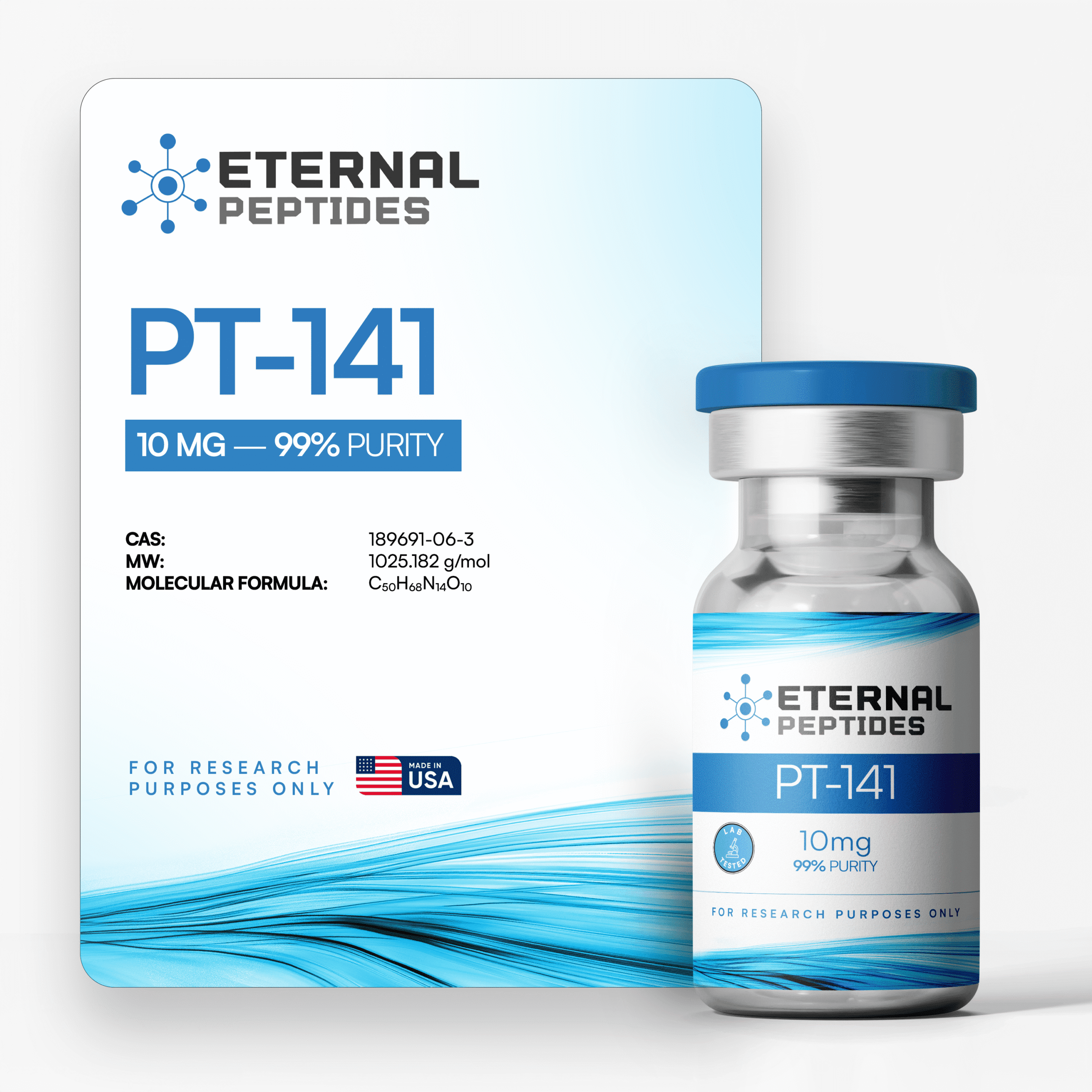
Order PT-141 10mg from Eternal Peptides, a trusted U.S. based supplier of research compounds verified by leading third-party labs with COAs. PT-141 (Bremelanotide) is a melanocortin receptor agonist peptide studied in controlled laboratory settings for its role in central nervous system signaling pathways. Each PT-141 10mg lot is independently tested for 99%+ purity and competitively priced, with free USPS Priority shipping on orders over $200. Sold for research use only.
PT-141, also known as bremelanotide, is a synthetic cyclic heptapeptide analog derived from melanocortin receptor–targeting compounds[1]. Structurally, it is a modified analogue of Melanotan II (MT-II), which is itself derived from α-melanocyte–stimulating hormone (α-MSH), an endogenous peptide produced by post-translational cleavage of proopiomelanocortin (POMC).
Unlike its predecessors, PT-141 was specifically optimized to reduce unwanted peripheral effects while retaining central melanocortin receptor activity, making it a more selective research tool within the melanocortin system.
PT-141 functions primarily as an agonist at melanocortin receptor subtypes MC3R and MC4R, which are expressed in key regions of the central nervous system including the hypothalamus, limbic system, and brainstem. These receptors are involved in a broad range of neuromodulatory processes, including energy homeostasis, autonomic regulation, and behavioral signaling.
MC4R in particular has been extensively studied for its role in hypothalamic circuits governing neuroendocrine output and autonomic nervous system activity, and represents the primary receptor subtype through which PT-141’s centrally mediated effects are thought to be exerted in preclinical models.
PT-141 was originally investigated during research into melanocortin pathways regulating pigmentation and neuroendocrine responses. Subsequent research shifted focus toward central arousal and behavioral signaling mechanisms, driven by observations in both animal models and early human studies.
In contrast to phosphodiesterase-5 (PDE5) inhibitors, which act peripherally through vascular smooth muscle relaxation, PT-141’s proposed mechanism operates at the level of the central nervous system, a distinction that has made it a subject of interest in neuropharmacological research and receptor-level mechanistic studies.
In the scientific literature, PT-141 has been examined in the context of hypothalamic melanocortin signaling, autonomic pathway activation, and behavioral response modulation. Preclinical studies have used it to probe MC3R and MC4R receptor function in animal models, while early-phase human research has contributed to understanding of its pharmacokinetic profile and central activity. Additional mechanistic work has been conducted in receptor-binding assays and cellular models to characterize its affinity, selectivity, and downstream signaling behavior across melanocortin receptor subtypes.
This PT-141 10mg lyophilized formulation is independently verified by third-party labs, including Janoshik and Finnrick, and is supplied with a Certificate of Analysis (COA) for full transparency. The lyophilized format ensures chemical stability during storage and supports accurate reconstitution and reproducible experimental handling in controlled laboratory settings. This product is intended strictly for research use only.
PT-141 (bremelanotide) is best understood as a centrally acting melanocortin receptor agonist, where its core mechanistic theme is receptor-driven neuromodulation: by activating melanocortin receptors. Most notably, PT-141 activates MC4R (and to a lesser extent MC3R), where it shifts hypothalamic and limbic signaling that can alter measurable arousal-related behaviors and autonomic outputs in preclinical models[2].
Early translational work and widely discussed animal studies (including hypothalamic activation and behavioral paradigms) helped establish PT-141 as a tool for probing melanocortin-linked CNS circuits rather than peripheral vasodilation pathways.
PT-141 binds melanocortin receptors expressed in the central nervous system, with mechanistic emphasis on MC4R-associated pathways. In rodent and primate models, this receptor engagement is linked to hypothalamic neuronal activation (often assessed via markers like c-Fos) and changes in sexual solicitation/erectile response readouts[2].
In cellular assays, receptor agonism supports controlled studies of melanocortin signaling dynamics, including receptor sensitivity, downstream second-messenger responses, and cross-talk with other neuroendocrine inputs. In short, PT-141 is used to map how melanocortin receptor activation translates into quantifiable behavioral and physiologic endpoints under standardized conditions.
Mechanistic models propose that melanocortin receptor activation modulates downstream neurotransmitter systems involved in motivation and arousal, commonly discussed in terms of dopaminergic signaling within hypothalamic circuits, alongside autonomic network effects that influence genital response and cardiovascular parameters[3].
In animal studies, these downstream shifts are reflected in changes in solicitation behaviors, mounting/partner interaction metrics, and erectile events without relying on nitric oxide–dependent peripheral vasodilation as the primary driver. Separately, because PT-141 is not perfectly subtype-selective, off-target melanocortin activity (e.g., MC1R) is often referenced when interpreting effects like pigmentation changes in some contexts.
Although human clinical evidence exists for specific arousal endpoints in limited populations, broader mechanistic extrapolations should be interpreted cautiously. The observations listed here should be restricted to controlled preclinical and translational research settings only.
Preclinical research on PT-141 (bremelanotide) primarily examines central melanocortin receptor signaling, behavioral modulation, and autonomic regulation. Note that observations described below are derived largely from animal models, receptor-binding assays, and controlled laboratory studies. These findings do not imply established human or veterinary outcomes.
PT-141 is not approved for general therapeutic use in this context, and Eternal Peptides supplies it strictly for research purposes.
PT-141 has been widely studied in rodent and nonhuman primate models evaluating melanocortin receptor–mediated behavioral responses. Activation of MC4R in hypothalamic regions has been associated with measurable changes in sexual solicitation behaviors, copulatory patterns, and erectile event frequency in experimental paradigms[4].
These outcomes are typically assessed using standardized behavioral scoring systems and neurochemical markers of neuronal activation.
Here’s the revised section:
MC4R is well established in preclinical literature as a regulator of sympathetic nervous system activity and cardiovascular function[5]. Central MC4R activation has been associated with changes in heart rate, blood pressure, and sympathetic tone across a range of animal models, reflecting the receptor’s integration within autonomic and neuroendocrine regulatory networks.
As an MC4R agonist, PT-141 operates within this signaling context, and cardiovascular parameters were monitored as part of its early clinical pharmacology evaluation. This is consistent with the known autonomic relevance of central melanocortin receptor activation.
These mechanistic relationships provide a framework for studying how melanocortin signaling interfaces with downstream autonomic and neuroendocrine outputs, though findings specific to PT-141 in this area remain more limited than those derived from broader MC4R agonist research.
Put plainly, scientists study PT-141 to better understand how central receptor activation can influence autonomic and hormonal signaling patterns in laboratory systems.
Melanocortin receptors, particularly MC4R, are well established as regulators of appetite and energy homeostasis. In animal models, melanocortin agonists have been shown to influence feeding behavior and body weight parameters, though the magnitude and direction of these effects vary by dose, duration of exposure, and receptor subtype engagement[5].
In this context, PT-141 has been used in preclinical research as a tool to examine how central melanocortin receptor activation translates into measurable changes in feeding behavior and energy regulation, providing a pharmacological framework for probing the intersection of brain receptor signaling and metabolic output in controlled experimental settings.
Human clinical data in this area remains limited, and the majority of mechanistic findings are derived from in vitro assays and animal studies. These observations should be interpreted within that preclinical context and are not representative of established clinical outcomes.
| Property | Description |
| Name | PT-141 (Bremelanotide); synthetic cyclic heptapeptide melanocortin receptor agonist derived from α-MSH analog research |
| Sequence | Ac-Nle-cyclo[Asp-His-D-Phe-Arg-Trp-Lys]-OH |
| Molecular Formula | C₅₀H₆₈N₁₄O₁₀ |
| Molecular Weight | ~1025.2 g/mol (free base; slight variation may occur depending on salt form) |
| PubChem CID | 9941379 |
| Product Form | Lyophilized powder in sterile research vials (e.g., 10mg per vial) |
| Purity | Typically ≥99%, verified through independent third-party analysis; lot-specific COA available |
| Solubility | Soluble in sterile water or bacteriostatic water for laboratory reconstitution; forms a clear solution when properly handled |
| Structure Type | Cyclic peptide with modified amino acids (including norleucine and D-phenylalanine) to enhance receptor stability and activity |
Note: PT-141 is a synthetic melanocortin receptor agonist developed for central nervous system signaling research. The cyclic structure contributes to enhanced stability relative to linear analogs. Supplied in lyophilized form to support long-term storage stability and reproducible reconstitution in controlled laboratory environments. Intended strictly for research use only.
Proper handling and storage of PT-141 are essential to preserve structural integrity, receptor-binding reliability, and reproducibility in laboratory settings. As a cyclic synthetic peptide supplied in lyophilized form, it should be protected from temperature fluctuations, light exposure, and moisture prior to reconstitution.
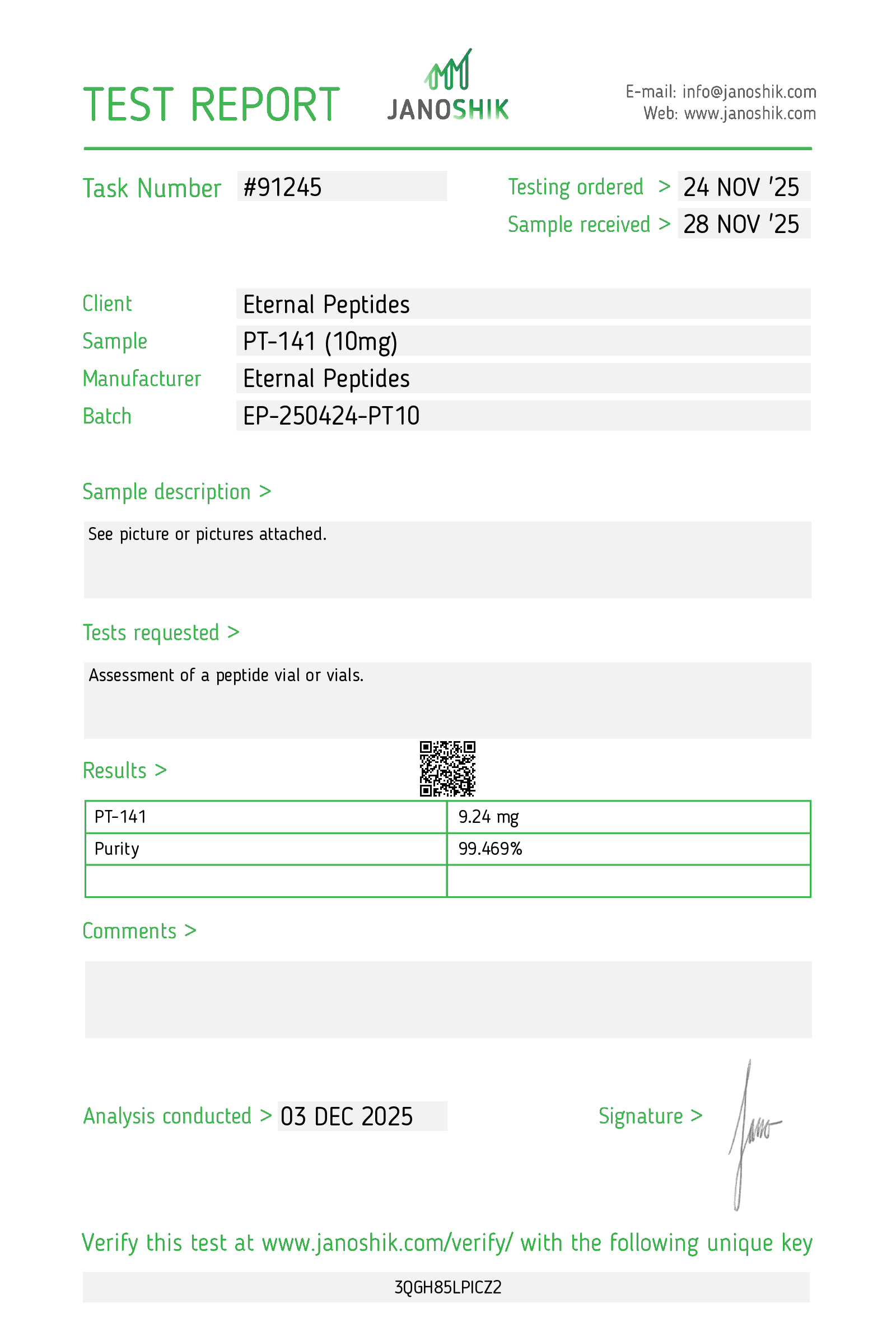
Quality verification is essential for reproducible melanocortin receptor research. Every PT-141 product lot is accompanied by a lot-specific Certificate of Analysis (COA), ensuring analytical confirmation prior to distribution. Eternal Peptides partners with independent third-party laboratories, including Janoshik, to provide objective verification of identity, purity, and quality metrics.
Each COA typically includes:
All COAs are batch-specific, fully traceable, and accessible through the Lab Tests page to support research reproducibility, documentation standards, and audit compliance.
PT-141 is supplied by Eternal Peptides strictly for laboratory research use only. It is not approved for human or veterinary use, clinical administration, therapeutic application, or diagnostic procedures of any kind. The safety, efficacy, and pharmacological effects of this compound in humans or animals have not been fully established outside approved regulatory contexts.
Purchasers and end users are solely responsible for ensuring compliance with all applicable local, state, and federal laws, as well as institutional biosafety standards and research-use regulations. Misrepresentation of the intended use of this product may result in regulatory enforcement actions or legal consequences.
About the Author:
Dr. Sony Sherpa, MBBS, MD
is a board-certified clinician with a background in emergency medicine and clinical practice. She specializes in medical research analysis, ensuring that product information is grounded in evidence-based medicine and strictly adheres to the latest scientific standards in peptide research and recovery.