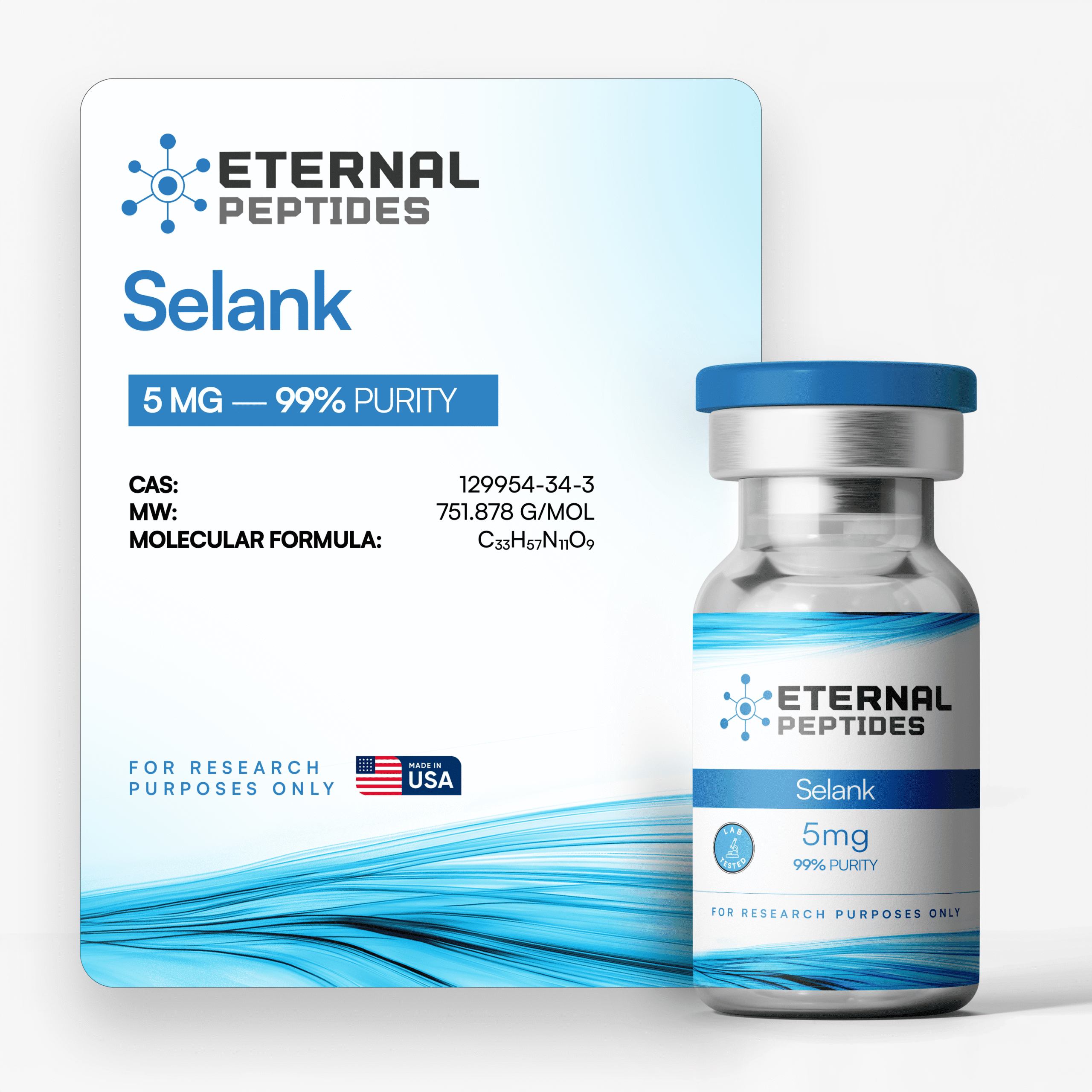
All products are handled with strict quality standards to ensure consistent research-grade excellence.
Our checkout is SSL encrypted and completely secure.
Our products are verified by independent third party laboratories to meet quality standards.
All product batches and lots are assigned unique identifiers and tied to publicly posted lab reports.
We are committed to helping our customers. If you have any questions or concerns, please reach out through our Contact Us page.
$34.99 – $54.99Price range: $34.99 through $54.99
| Quantity | Discount | Price |
|---|---|---|
| 5 - 10 | 5% | $33.24 |
| 11 - 20 | 10% | $31.49 |
| 21+ | 15% | $29.74 |
Every batch of our research chemicals and peptides undergoes third-party testing.
*Disclaimer: This product is intended solely for laboratory research purposes. It is not suitable for consumption by humans, nor for medical, veterinary, or household purposes. Kindly review our Terms & Conditions before making a purchase.

Always quality-tested, verified with third party COA’s
At every step, we prioritize quality by conducting rigorous third-party testing on all our products. These tests focus on five key characteristics- identity, purity, sterility, and endotoxin levels, and heavy metal content-ensuring that each product meets the highest standards of quality with independent third-party Certificates of Analysis (COAS) to verify our commitment to excellence.
*Disclaimer: This product is intended solely for laboratory research purposes. It is not suitable for consumption by humans, nor for medical, veterinary, or household purposes.Kindly review our Terms & Conditions before making a purchase.
Shop Selank from Eternal Peptides, a trusted supplier of research compounds tested for 99%+ purity by independent third-party labs, including Janoshik and Finnrick, with Certificates of Analysis. Selank is a synthetic heptapeptide studied for its interactions with neurochemical signaling pathways associated with stress response and cognitive function. Each order ships fast and securely via USPS, with knowledgeable customer support available on phone and email. Sold for research use only.
Selank is a synthetic heptapeptide (Thr-Lys-Pro-Arg-Pro-Gly-Pro) developed as a stabilized analogue of tuftsin, an endogenous tetrapeptide fragment derived from the Fc region of immunoglobulin G that plays a role in immune modulation and neuropeptide signaling. By extending the tuftsin sequence and modifying its structure, researchers aimed to improve metabolic stability and prolong biological activity while retaining its core pharmacological properties.
Selank was originally investigated in Russian research institutions as part of broader efforts to characterize short regulatory peptides with potential relevance to stress-related neurobiology and neuroimmune signaling.
In the scientific literature, Selank is primarily studied for its influence on central nervous system pathways. Research has focused on its proposed modulation of GABAergic signaling, including possible interactions with GABA-A receptor activity, as well as downstream effects on monoamine systems, including serotonin and dopamine regulation.
Preclinical studies have explored Selank’s effects across a range of behavioral and neurochemical models, including anxiety-like behavior, learning and memory tasks, and markers of neurochemical balance in animal subjects. Research has also examined its potential influence on BDNF expression and enkephalin metabolism, which point to broader neuromodulatory activity spanning multiple signaling pathways rather than a single discrete mechanism.
However, human research remains comparatively limited, and most mechanistic findings are derived from in vitro assays and animal models.As such, all observations and findings should be restricted to controlled laboratory research settings and are not representative of established clinical outcomes.
Eternal Peptides supplies Selank as a high-purity lyophilized powder, verified by independent third-party labs and accompanied by a Certificate of Analysis for full batch transparency. The lyophilized format ensures chemical stability during storage and transport, supporting accurate reconstitution and reproducible handling in controlled laboratory settings. Intended for research use only.
Being a stabilized analogue of tuftsin, Selank is studied as a short regulatory heptapeptide that appears to modulate neurochemical signaling and neuroimmune pathways through multiple mechanisms, rather than acting as a classic single-target agonist or receptor ligand. Preclinical work links it to changes in inhibitory neurotransmission, endogenous peptide metabolism, neurotrophic factor expression, and inflammatory signaling.
These patterns are typically evaluated through behavioral assays, transcriptomic profiling, and cellular readouts, and should not be interpreted as implying therapeutic effect.
Transcriptomic and cell-based studies suggest Selank can shift gene expression patterns associated with inhibitory neurotransmission, with findings indicating potential influence on the regulation of GABAergic signaling components. Volkova (2016) and Filatova (2017) reported changes in transcript profiles linked to GABA-related pathways following Selank exposure in cellular models[1], providing a molecular basis for its use in rodent anxiety-like behavior paradigms and cognitive performance assays.
While the precise receptor-level mechanism remains under investigation, these findings position GABAergic modulation as one of the more consistently reported mechanistic observations in the Selank literature.
Biochemical work by Zozulya and colleagues (2001) demonstrated that Selank can inhibit enkephalinase, an enzyme responsible for the degradation of endogenous enkephalins, effectively prolonging the availability of these endogenous opioid peptides at receptor sites[2].
This mechanism has been used experimentally to explore how modulation of opioid peptide tone influences stress reactivity, anxiety-related behavior, and pain response measures in animal models. The enkephalinase inhibition pathway represents a pharmacologically distinct mechanism from GABAergic modulation, further supporting the characterization of Selank as a multi-pathway neuromodulatory compound.
Preclinical research has also examined Selank’s potential influence on brain-derived neurotrophic factor (BDNF) expression[3]. BDNF plays a central role in neuronal survival, synaptic plasticity, and cognitive function, and its modulation has been a focus of research into stress-related neurobiological changes.
Studies in rodent models have reported shifts in BDNF expression levels following Selank administration, suggesting a potential interaction with neurotrophic signaling pathways. These findings remain exploratory and have not been systematically replicated across model systems.
Selank’s structural relationship to tuftsin, which is an endogenous immunomodulatory peptide, has motivated investigation into its effects at the neuroimmune interface. Animal stress models and human immunology observations, particularly cytokine profiling studies, have reported shifts in cytokine profiles following Selank exposure, including changes in interleukin expression patterns associated with inflammatory regulation[4].
These findings support studying Selank as a tool for probing the interaction between central nervous system signaling and peripheral immune responses, an area of growing interest in neuroimmunology research.
Controlled human clinical evidence for Selank remains limited, and the mechanistic pathways described above are largely characterized through in vitro assays, transcriptomic studies, and animal models. Findings across these domains should be interpreted within a preclinical research context and are not representative of established clinical outcomes. This compound is intended for research use only.
Preclinical research has primarily examined Selank in models of stress-related behavior, cognitive processing, and neuroimmune signaling. These observations derive largely from animal studies and limited exploratory human research contexts and do not imply established human or veterinary benefits.
Selank is not approved for medical use, and it is supplied strictly for laboratory investigation.
Rodent studies consistently evaluate Selank in validated behavioral paradigms such as the elevated plus maze and open field test. In these models, administration has been associated with altered exploratory behavior and reduced stress-reactive patterns, often compared against classical anxiolytic references. Gene expression analyses suggest modulation of neurotransmission-related transcripts in limbic brain regions, supporting investigation into stress-response circuitry[3].
In short, researchers use Selank in animal stress models to observe how changes in brain signaling might influence measurable anxiety-like behaviors under controlled laboratory conditions.
Selank has also been studied in learning and memory tasks, including conditioned avoidance and spatial navigation models[5]. Some animal experiments report changes in attention-related performance and task acquisition speed, particularly under stress-exposed conditions. These findings are often interpreted alongside data suggesting regulatory effects on monoamine and GABA-linked pathways.
Put plainly, investigators explore whether Selank influences how animals process and retain information, especially when stress would normally impair performance.
Another research area involves Selank’s interaction with immune mediators. Experimental work has reported shifts in cytokine profiles and inflammatory signaling markers in stress-exposed animal models, indicating possible cross-talk between central nervous system activity and peripheral immune responses[4]. This aligns with its structural origin as a tuftsin analogue, linking it conceptually to immunomodulatory peptide research.
Meaning, scientists examine whether Selank changes measurable immune signaling patterns in laboratory animals, particularly under stress conditions.
Transcriptomic and biochemical analyses suggest Selank may influence expression of genes related to GABAergic and monoaminergic systems[1]. Rather than acting as a direct receptor agonist, it appears to modulate regulatory networks affecting inhibitory and excitatory balance. These effects are studied in controlled experimental systems to better understand peptide-based neuromodulation.
Simply put, researchers are investigating how Selank may subtly adjust brain signaling systems rather than directly switching a single receptor on or off.
These observations notwithstanding, controlled, large-scale human clinical evidence on Selank’s effects remains limited. All findings should be interpreted within a preclinical research framework only.
| Property | Description |
| Name | Selank (synthetic tuftsin analogue; Thr-Lys-Pro-Arg-Pro-Gly-Pro) |
| Sequence | Thr–Lys–Pro–Arg–Pro–Gly–Pro (TKPRPGP) |
| Molecular Weight | 751.9 g/mol (free peptide; may vary slightly in salt form) |
| Molecular Formula | C₃₃H₅₇N₁₁O₉ |
| PubChem CID | 11765600 |
| Peptide Length | Heptapeptide (7 amino acids) |
| Product Form | Selank 10 mg lyophilized powder supplied in sterile research vials |
| Purity | ≥99% by HPLC, verified with Certificate of Analysis (COA) |
| Solubility | Freely soluble in sterile water or bacteriostatic water following reconstitution; solutions should be prepared under controlled laboratory conditions |
Note: Selank is supplied as a lyophilized peptide to support stability during storage and transport. Reconstituted solutions should be handled using standard laboratory procedures and stored according to established peptide stability guidelines.
Proper handling and storage of Selank are essential to preserve peptide integrity and ensure reproducible laboratory outcomes. As a short-chain synthetic peptide supplied in lyophilized form, it is sensitive to moisture, temperature fluctuations, and repeated freeze–thaw cycles.
Each lot of Selank is accompanied by a lot-specific Certificate of Analysis (COA) to support research reproducibility, transparency, and documentation standards. Eternal Peptides works with independent third-party analytical laboratories, including Janoshik, to verify product specifications prior to release.
COAs are designed to provide comprehensive analytical data and typically include:
All COAs are lot-traceable and accessible through the Lab Tests page, allowing researchers to verify analytical results and maintain audit-ready documentation. This structured quality assurance process supports consistent batch-to-batch performance in research settings.
Selank is supplied strictly for laboratory research use only. It is not approved for human or veterinary use, clinical administration, therapeutic application, or diagnostic procedures of any kind. Safety and efficacy in humans have not been established, and no medical or treatment claims are made or intended here.
As the purchasers, you are responsible for ensuring compliance with all applicable local, state, and federal laws, as well as institutional biosafety policies and research-use regulations. This material should be handled in appropriate laboratory settings. Any misrepresentation of intended use may result in regulatory or legal consequences.
About the Author:
Dr. Sony Sherpa, MBBS, MD
is a board-certified clinician with a background in emergency medicine and clinical practice. She specializes in medical research analysis, ensuring that product information is grounded in evidence-based medicine and strictly adheres to the latest scientific standards in peptide research and recovery.