All products are handled with strict quality standards to ensure consistent research-grade excellence.
Our checkout is SSL encrypted and completely secure.
Our products are verified by independent third party laboratories to meet quality standards.
All product batches and lots are assigned unique identifiers and tied to publicly posted lab reports.
We are committed to helping our customers. If you have any questions or concerns, please reach out through our Contact Us page.
$49.99 – $79.99Price range: $49.99 through $79.99
| Quantity | Discount | Price |
|---|---|---|
| 5 - 10 | 5% | $47.49 |
| 11 - 20 | 10% | $44.99 |
| 21+ | 15% | $42.49 |
Every batch of our research chemicals and peptides undergoes third-party testing.
*Disclaimer: This product is intended solely for laboratory research purposes. It is not suitable for consumption by humans, nor for medical, veterinary, or household purposes. Kindly review our Terms & Conditions before making a purchase.

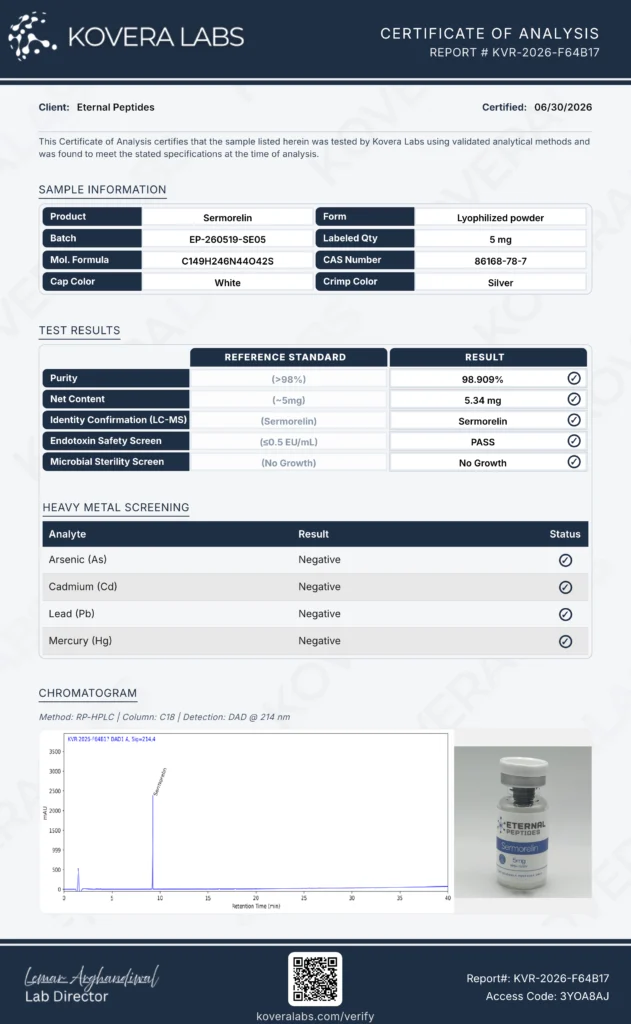
At every step, we prioritize quality by conducting rigorous third-party testing on all our products. These tests focus on five key characteristics- identity, purity, sterility, and endotoxin levels, and heavy metal content-ensuring that each product meets the highest standards of quality with independent third-party Certificates of Analysis (COAS) to verify our commitment to excellence.
*Disclaimer: This product is intended solely for laboratory research purposes. It is not suitable for consumption by humans, nor for medical, veterinary, or household purposes.Kindly review our Terms & Conditions before making a purchase.
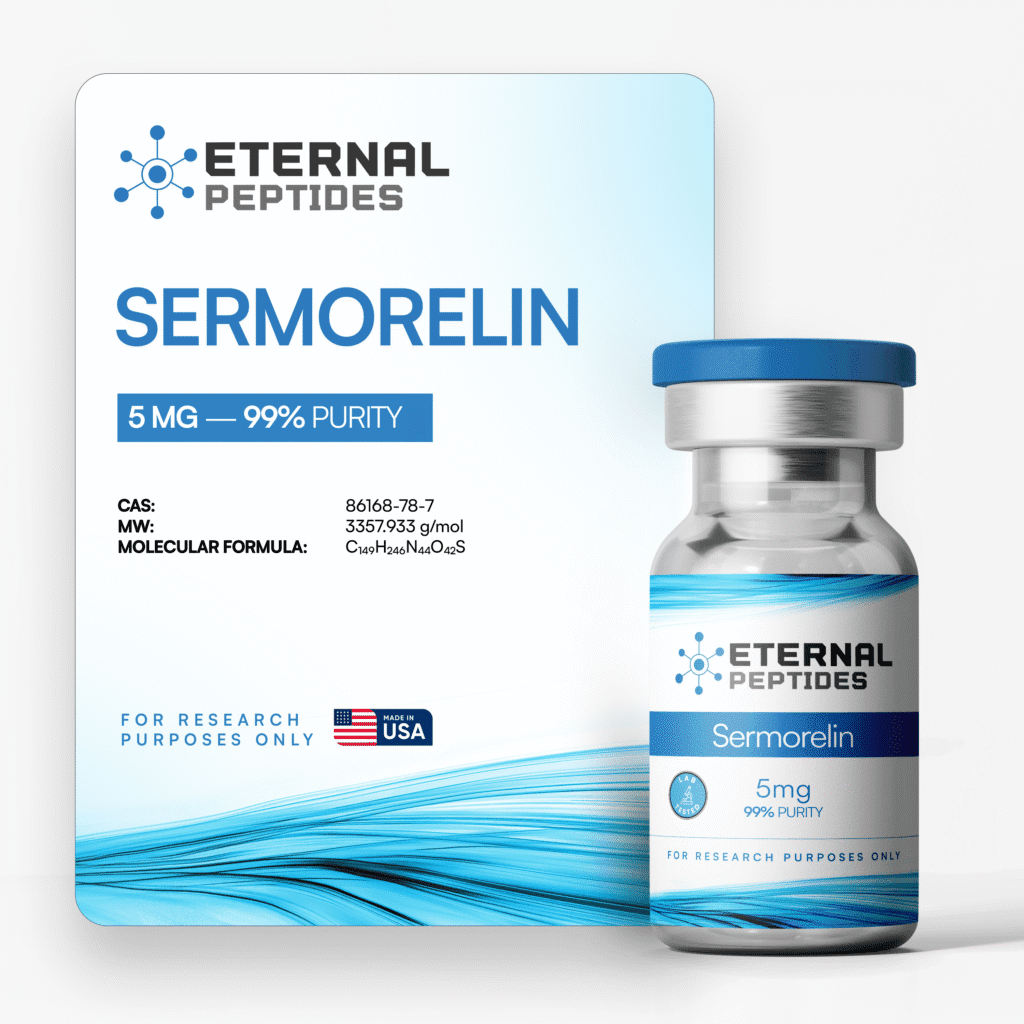
Order Sermorelin 5mg from Eternal Peptides, a trusted peptides supplier committed to rigorous third-party testing for quality and purity. This growth hormone-releasing peptide is studied for its potential effects on growth hormone secretion and metabolic processes. Each 5mg vial delivers high-purity Sermorelin, as verified by leading laboratories with Certificates of Analysis available for full transparency. Get affordable Sermorelin 5mg with the option of USPS Priority Express shipping, with our dedicated phone support. Sold for research use only.
Sermorelin is a synthetic analogue of growth hormone-releasing hormone (GHRH), specifically comprising the first 29 amino acids of the naturally occurring 44-amino acid GHRH peptide.
Originally developed in the 1980s by researchers investigating growth hormone regulation, sermorelin functions as a growth hormone secretagogue by binding to specific receptors in the anterior pituitary gland. This truncated peptide retains full biological activity of the native hormone while offering improved stability and practicality for research applications.
The scientific literature primarily investigates sermorelin for its effects on growth hormone secretion patterns, metabolic signaling pathways, and age-related physiological changes. Research has explored its influence on body composition, sleep architecture, and tissue repair mechanisms, with most foundational findings derived from in vitro studies and animal models, though some human clinical data exists.
As a research tool, sermorelin’s relatively short peptide sequence provides excellent solubility in standard aqueous solutions and good reconstitution stability when lyophilized, making it ideal for controlled laboratory experiments. Its predictable pharmacokinetic profile and well-characterized mechanism of action have established sermorelin as a valuable compound for studies examining growth hormone dynamics and pituitary function.
Sermorelin functions primarily as a growth hormone-releasing hormone (GHRH) analogue, binding selectively to GHRH receptors on somatotroph cells within the anterior pituitary gland.
This receptor activation stimulates the synthesis and pulsatile secretion of endogenous growth hormone (GH), which subsequently triggers downstream metabolic and anabolic signaling cascades throughout the body.
Unlike direct GH administration, sermorelin preserves the natural regulatory feedback mechanisms of the hypothalamic-pituitary axis, making it a valuable tool for studying physiological growth hormone dynamics[1]. Research in animal models has observed effects on body composition, protein synthesis, lipolysis, and sleep quality following sermorelin administration, outcomes attributed to the restoration of age-related declines in GH secretion.
Sermorelin exerts its primary effect by binding to GHRH receptors, which are G-protein-coupled receptors expressed on pituitary somatotrophs[2]. Upon binding, the receptor activates adenylyl cyclase, increasing intracellular cyclic AMP (cAMP) levels and triggering protein kinase A (PKA) signaling.
This cascade promotes the transcription of the GH gene and mobilization of stored GH from secretory granules. Studies in rodent models have demonstrated that sermorelin administration produces pulsatile GH release patterns that closely mimic physiological secretion, unlike sustained elevations seen with exogenous GH[3].
This preservation of natural pulsatility appears crucial for maintaining normal feedback regulation through insulin-like growth factor-1 (IGF-1) and somatostatin, preventing desensitization of the GH axis.
The receptor-mediated mechanism makes sermorelin particularly useful for investigating age-related changes in pituitary responsiveness and GH reserve capacity.
Growth hormone released in response to sermorelin stimulates hepatic and peripheral tissue production of insulin-like growth factor-1 (IGF-1), the primary mediator of GH’s anabolic effects[4]. IGF-1 binds to IGF-1 receptors on target tissues, activating the PI3K/Akt and MAPK/ERK pathways that regulate protein synthesis, cellular proliferation, and tissue growth.
Animal studies have shown that sermorelin-induced GH secretion elevates circulating IGF-1 levels and local tissue IGF-1 expression[1]. Research in aging rodent models has observed improvements in lean body mass and bone mineral density associated with restored IGF-1 signaling[5].
Cellular assays demonstrate that IGF-1 promotes myocyte hypertrophy, chondrocyte proliferation, and osteoblast differentiation, mechanisms that underlie the tissue-building effects observed in preclinical models. This indirect IGF-1 stimulation, as opposed to direct GH administration, maintains physiological feedback control and may reduce risks of excessive receptor activation.
Sermorelin-induced growth hormone secretion influences multiple metabolic pathways, particularly lipid metabolism and glucose homeostasis. GH promotes lipolysis by activating hormone-sensitive lipase in adipocytes, increasing free fatty acid mobilization and oxidation[6].
Animal studies have documented reductions in visceral adipose tissue and improvements in lipid profiles following chronic sermorelin administration[7]. Additionally, GH modulates insulin sensitivity and glucose uptake in peripheral tissues, though effects appear tissue-specific and dose-dependent.
Rodent models have shown that IGF-I and des(1-3)IGF-I treatment can improve nitrogen retention and shift substrate utilization toward fat oxidation while sparing lean tissue during caloric restriction[8]. These metabolic shifts observed in preclinical settings have made sermorelin a compound of interest for studying body composition regulation and energy homeostasis, particularly in the context of aging-related metabolic decline.
Growth hormone secretion occurs predominantly during slow-wave sleep, and sermorelin administration has been shown to enhance both GH release and sleep quality in animal models[9]. These studies suggest that sermorelin may influence sleep architecture by modulating hypothalamic sleep-regulatory centers and increasing the amplitude of GH pulses during nocturnal sleep phases.
In the study, research in aging rodents showed observed improvements in sleep continuity and slow-wave sleep duration with sermorelin treatment, correlating with enhanced GH secretory patterns. The relationship between GH and sleep appears bidirectional, as improved sleep quality may further optimize endogenous GH secretion.
Cellular studies indicate that GH promotes tissue repair processes during sleep, including protein synthesis, immune function, and cellular regeneration. These observations have positioned sermorelin as a research tool for investigating the complex interactions between neuroendocrine regulation, sleep physiology, and recovery mechanisms.
While sermorelin’s mechanism of action is well-characterized through receptor binding studies and preclinical models, controlled human clinical evidence remains limited compared to the extensive animal literature.
Most mechanistic insights derive from rodent studies, in vitro receptor assays, and small-scale human pharmacokinetic trials. The translational relevance of dosing, timing, and long-term effects observed in animal models to human physiology requires careful interpretation.
Researchers should recognize that findings from preclinical studies provide mechanistic frameworks rather than definitive clinical outcomes, and all applications should be considered strictly within a research context.
Sermorelin has been investigated across multiple research domains, primarily focusing on growth hormone dynamics, age-related physiological decline, body composition alterations, metabolic regulation, and sleep-wake cycle modulation.
These applications represent observations from animal models, cellular assays, and limited preclinical studies. It is critical to note that such findings do not translate to human or veterinary therapeutic benefits, as controlled clinical evidence remains insufficient.
Sermorelin is not approved for clinical use, and Eternal Peptides does not promote or advocate for any human therapeutic applications.
Animal studies have consistently demonstrated that sermorelin administration can restore pulsatile growth hormone secretion patterns in aging rodent models, where endogenous GH production naturally diminishes[10].
Research indicates that older animals treated with sermorelin exhibit GH secretory profiles more similar to younger controls, suggesting preserved pituitary responsiveness to GHRH receptor stimulation. These studies have observed correlations between restored GH levels and improvements in markers associated with aging, including lean tissue maintenance, bone density preservation, and immune function metrics.
Investigations in aging rat models have documented that chronic sermorelin treatment partially reverses age-related declines in IGF-1 concentrations, a key mediator of GH’s physiological effects[1]. This research application makes sermorelin valuable for studying the neuroendocrine aspects of aging and the role of the somatotropic axis in age-related physiological changes.
Simply said, sermorelin can help aging animals release more growth hormone similar to younger animals, as researchers continue to study how hormone levels change with age.
Preclinical research has examined sermorelin’s effects on body composition parameters in various animal models. Studies in rodents have observed increases in lean body mass, reductions in adipose tissue accumulation, and favorable shifts in muscle-to-fat ratios following sermorelin administration[11].
These changes appear mediated through GH-stimulated protein synthesis, enhanced nitrogen retention, and increased lipolytic activity in adipocytes. Research using dual-energy X-ray absorptiometry (DEXA) scanning in animal models has quantified significant improvements in lean tissue mass and bone mineral content with chronic sermorelin treatment.
These observations have positioned sermorelin as a research tool for investigating the hormonal regulation of body composition and the mechanisms underlying sarcopenia and age-related muscle loss.
Research has investigated sermorelin’s influence on various metabolic parameters, particularly lipid metabolism and energy substrate utilization[11]. Animal studies have documented improvements in lipid profiles, including reductions in total cholesterol, LDL cholesterol, and triglycerides in rodent models treated with sermorelin.
These effects appear linked to GH-mediated enhancement of lipolysis and fatty acid oxidation in adipose and hepatic tissues. Studies in metabolic disorder models have observed that sermorelin administration correlates with improved insulin sensitivity markers and glucose homeostasis, though these effects show variability depending on baseline metabolic status and dosing protocols.
Research has also examined sermorelin’s impact on energy expenditure, with some animal studies noting increases in resting metabolic rate associated with elevated GH secretion. These metabolic research applications make sermorelin useful for investigating the complex interplay between growth hormone signaling and whole-body energy regulation.
In short, these studies suggest that sermorelin may influence how the body processes fats and sugars, making it useful for researchers studying metabolism and energy use.
The relationship between growth hormone secretion and sleep architecture has been studied using sermorelin in animal models. Research indicates that sermorelin administration can enhance slow-wave sleep duration and sleep continuity in rodents, particularly in aging subjects where sleep quality naturally deteriorates[9].
Studies have observed that sermorelin treatment increases the amplitude of nocturnal GH pulses, which coincide with deep sleep phases, suggesting a bidirectional relationship between sleep quality and GH secretion. Animal research has also documented improvements in recovery markers following physical stress or tissue injury in sermorelin-treated subjects, potentially linked to enhanced nocturnal GH release and its associated anabolic effects.
These observations have made sermorelin a valuable compound for investigating the neuroendocrine regulation of sleep, the role of GH in restorative processes, and the mechanisms underlying sleep-related tissue repair.
This means sermorelin may improve sleep quality in animals and help them recover better, which scientists use to study the connection between growth hormone, sleep, and healing processes.
| Property | Details |
| Name | Sermorelin (Sermoreline, Sermorelina) |
| Sequence | YADAIFTNSYRKVLGQLSARKLLQDIMSR (H-Tyr-Ala-Asp-Ala-Ile-Phe-Thr-Asn-Ser-Tyr-Arg-Lys-Val-Leu-Gly-Gln-Leu-Ser-Ala-Arg-Lys-Leu-Leu-Gln-Asp-Ile-Met-Ser-Arg-NH2) |
| Molecular Weight | 3357.9 g/mol |
| Molecular Formula | C₁₄₉H₂₄₆N₄₄O₄₂S (free base) |
| PubChem CID | 16132413 483927746 (Sermorelin Acetate salt form) |
| Product Form | Lyophilized powder in sterile vials (5 mg) |
| Purity | ≥99% (verified via third-party testing with lot-specific COAs available) |
| Solubility | Highly soluble in sterile water or bacteriostatic water; recommended reconstitution at 1-2 mg/mL concentration for optimal stability |
| Storage | Lyophilized powder stable at -4°F(-20°C); reconstituted solution should be stored at -4°F to -22°F (-20°C to -30°C) and used within 14 days |
| Appearance | Lyophilized powder in 5mg glass vials |
Notes: Sermorelin is sometimes supplied in the acetate salt to enhance stability and solubility. The 29-amino acid sequence represents the bioactive N-terminal fragment of human growth hormone-releasing hormone (GHRH 1-44).
Sermorelin should be stored as a lyophilized powder at -4°F to -22°F (-20°C to -30°C) in its original sealed vial, protected from light and moisture to maintain long-term stability. Once received, the peptide should be stored in a freezer immediately and kept sealed until ready for reconstitution.
For reconstitution, use sterile water or bacteriostatic water (0.9% benzyl alcohol) at a concentration of 1-2 mg/mL, allowing the solvent to gently dissolve the powder without vigorous shaking or vortexing, which may denature the peptide. For the best stability, purity, and consistent results, get bacteriostatic water with your sermorelin order.
Once reconstituted, the solution should be stored at 36°F to 46°F (2°C to 8°C) and used within 14 days for optimal stability and activity.
For extended research protocols, aliquot the reconstituted solution into smaller volumes to avoid repeated freeze-thaw cycles, which can significantly degrade peptide integrity. If freezing aliquots is necessary, store at -4°F to -22°F and thaw only once before use.
Working solutions intended for immediate use can be maintained at refrigerated temperatures but should never be left at room temperature for extended periods.
All handling should follow institutional biosafety and chemical safety guidelines, including the use of appropriate personal protective equipment (PPE) and aseptic technique to prevent contamination. Proper disposal of unused materials should comply with institutional and local regulations for laboratory waste.
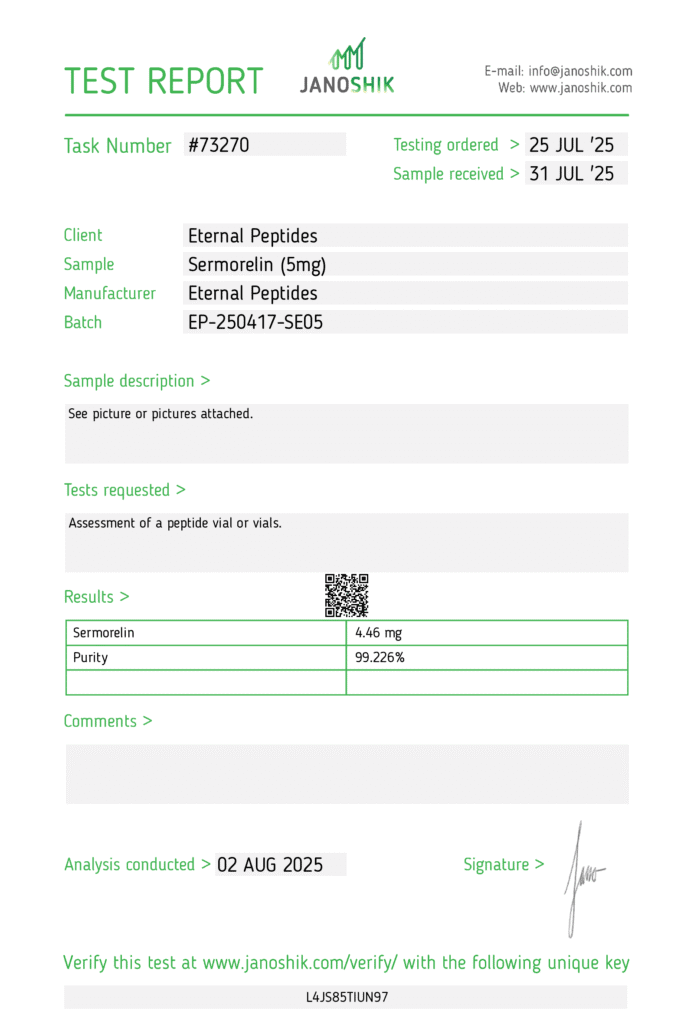
Eternal Peptides provides comprehensive Certificates of Analysis (COAs) for every sermorelin product lot, ensuring full transparency and traceability for research applications.
Each COA is generated through rigorous third-party testing conducted by leading analytical laboratories such as Janoshik, recognized for their expertise in peptide verification and quality control. These independent analyses provide researchers with objective, reliable data to support experimental reproducibility and institutional audit compliance.
Every COA includes detailed analytical results covering multiple quality parameters:
All COAs are lot-specific and uniquely traceable to individual production batches, ensuring researchers can verify the exact material used in their studies. These documents are readily accessible through Eternal Peptides’ dedicated Lab Tests page, where researchers can search by product name or lot number.
This comprehensive quality assurance system supports rigorous scientific standards, facilitates regulatory compliance for institutional research programs, and provides the documentation necessary for publication and peer review processes.
Sermorelin is supplied strictly for laboratory research purposes only and is not approved by the FDA or any regulatory authority for human consumption, clinical use, veterinary applications, therapeutic treatment, or diagnostic procedures.
The safety and efficacy of sermorelin in humans have not been established through controlled clinical trials. This product is intended solely for laboratory research use within approved frameworks and complying with applicable biosafety protocols.
Purchasers are solely responsible for ensuring compliance with all local, state, federal, and international regulations governing the acquisition, handling, and use of research peptides. By purchasing this product, buyers acknowledge and accept full responsibility for lawful and appropriate use in accordance with institutional research guidelines and regulatory requirements.
https://pmc.ncbi.nlm.nih.gov/articles/PMC2699646/
https://pubmed.ncbi.nlm.nih.gov/18031173/
https://pmc.ncbi.nlm.nih.gov/articles/PMC3764915/
https://pmc.ncbi.nlm.nih.gov/articles/PMC8308565/
https://pmc.ncbi.nlm.nih.gov/articles/PMC7180987/
https://onlinelibrary.wiley.com/doi/full/10.1002/rco2.9
https://pubmed.ncbi.nlm.nih.gov/1710892/
https://pmc.ncbi.nlm.nih.gov/articles/PMC3181657/
About the Author:
Dr. Sony Sherpa, MBBS, MD
is a board-certified clinician with a background in emergency medicine and clinical practice. She specializes in medical research analysis, ensuring that product information is grounded in evidence-based medicine and strictly adheres to the latest scientific standards in peptide research and recovery.