Satisfaction Guaranteed
All products are handled with strict quality standards to ensure consistent research-grade excellence.
Secure Ordering
Our checkout is SSL encrypted and completely secure.
Third-party Tested
Our products are verified by independent third party laboratories to meet quality standards.
Batch & Lot Tracking
All product batches and lots are assigned unique identifiers and tied to publicly posted lab reports.
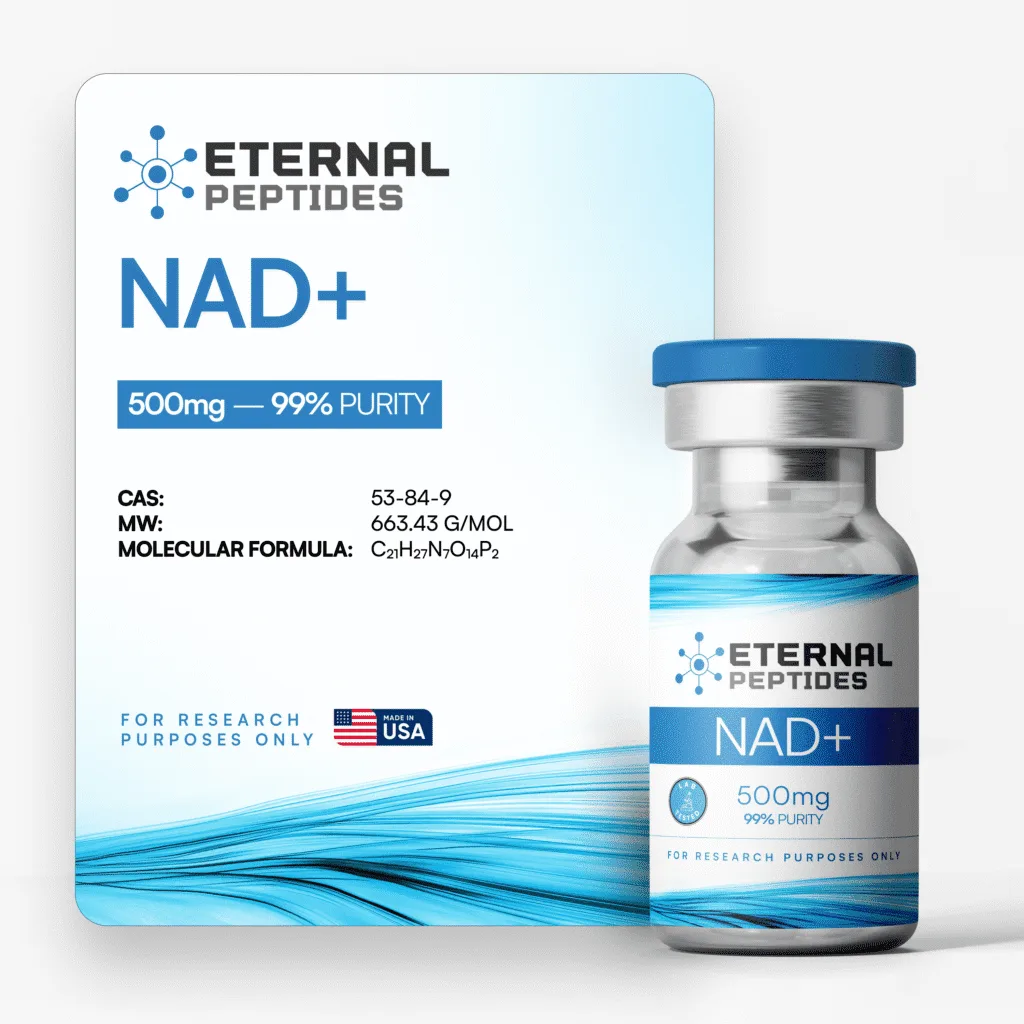
NAD+ (500mg)
$75.00 Original price was: $75.00.$69.99Current price is: $69.99.
Save 5.01$ (7% Off)
Discount per Quantity
| Quantity | Discount | Price |
|---|---|---|
| 5 - 10 | 5% | $66.49 |
| 11 - 20 | 10% | $62.99 |
| 21+ | 15% | $59.49 |
Concentration: ≥99%
Rigorous Third-Party Testing
Every batch of our research chemicals and peptides undergoes third-party testing.
*Disclaimer: This product is intended solely for laboratory research purposes. It is not suitable for consumption by humans, nor for medical, veterinary, or household purposes. Kindly review our Terms & Conditions before making a purchase.
Always quality-tested, verified with third party COA’s
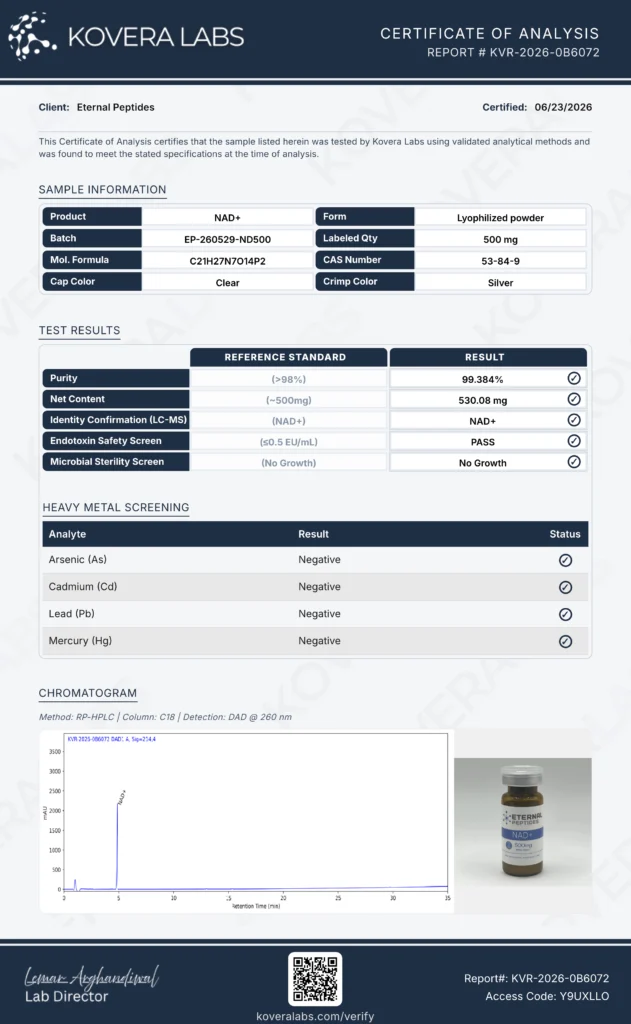
At every step, we prioritize quality by conducting rigorous third-party testing on all our products. These tests focus on five key characteristics- identity, purity, sterility, and endotoxin levels, and heavy metal content-ensuring that each product meets the highest standards of quality with independent third-party Certificates of Analysis (COAS) to verify our commitment to excellence.
Identity Test
Purity Test
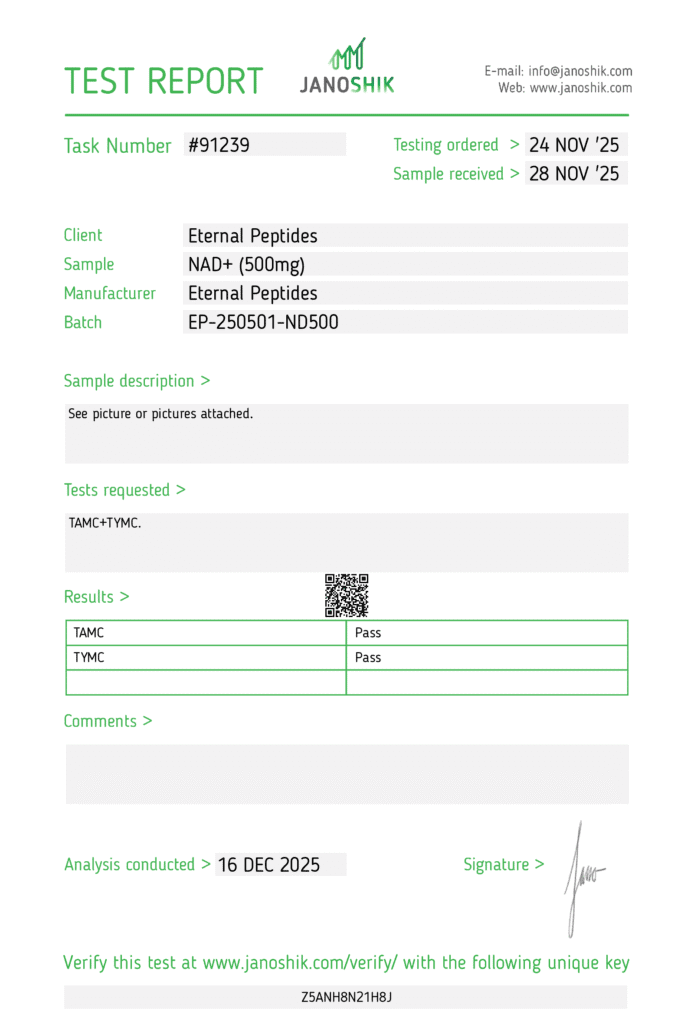
Sterility Test
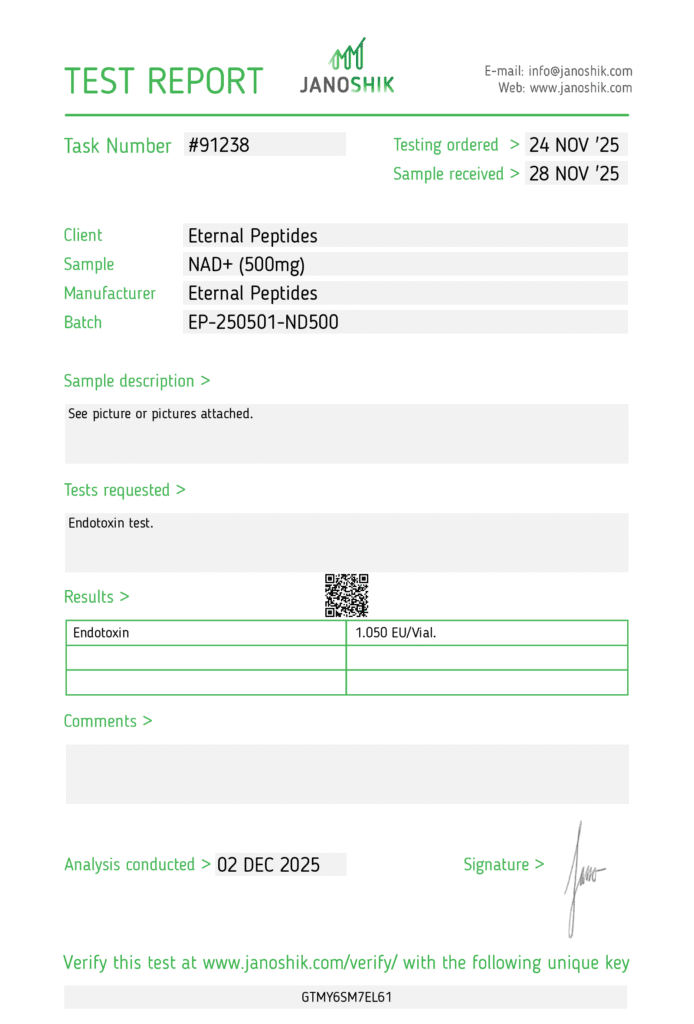
Endotoxin Test
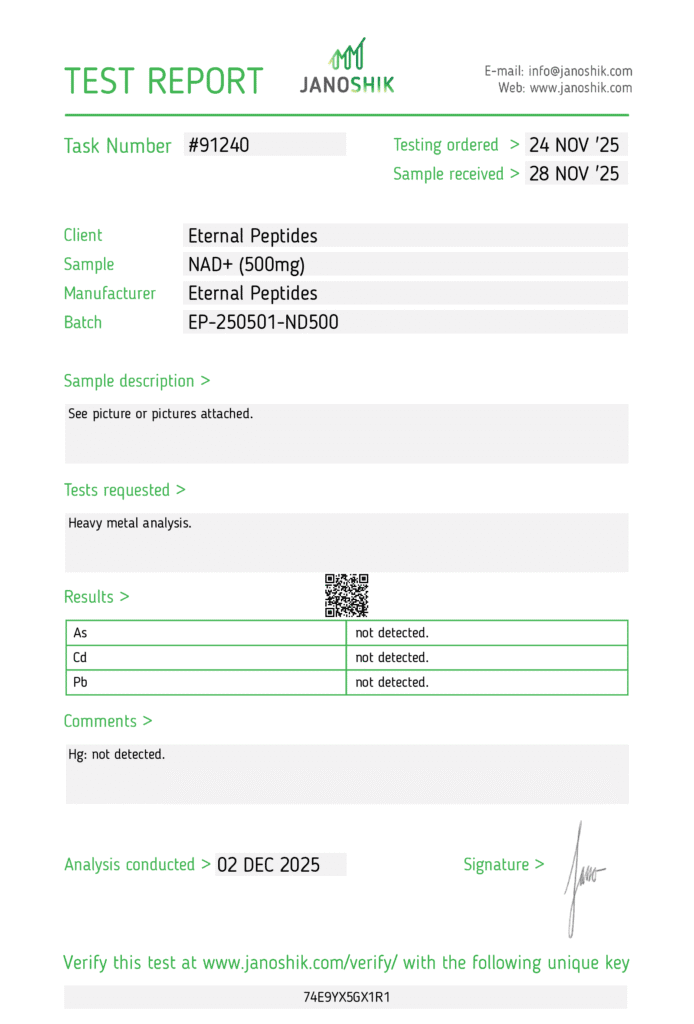
Heavy Metals Test
Identity Test
Purity Test
Sterility Test
Endotoxin Test
Heavy Metals Test
*Disclaimer: This product is intended solely for laboratory research purposes. It is not suitable for consumption by humans, nor for medical, veterinary, or household purposes.Kindly review our Terms & Conditions before making a purchase.
Shop high-purity NAD+ 500mg at Eternal Peptides, the trusted source for verified research compounds in the USA. This essential coenzyme is synthesized to a standard of ≥99% purity, with every batch rigorously tested and certified by Janoshik Analytical. NAD+ is a critical reagent for researchers investigating mitochondrial function, sirtuin activation, and cellular energy metabolism. Order today for fast, secure US shipping and free Priority delivery on all orders over $200.
What is NAD+?
Nicotinamide adenine dinucleotide (NAD⁺) is a naturally occurring dinucleotide coenzyme composed of two nucleotides joined through their phosphate groups.
Unlike a peptide, NAD⁺ is a small, non-protein molecule derived from niacin (vitamin B3) and is present in all living cells. It exists in oxidized (NAD⁺) and reduced (NADH) forms, allowing it to function as a central electron carrier in cellular metabolism.
In the scientific literature, NAD⁺ is primarily studied for its role in cellular energy metabolism, redox balance, and enzymatic regulation. Research frequently examines its involvement in mitochondrial function, cellular stress responses, and age-associated metabolic changes.
Most NAD⁺ mechanistic insights come from in vitro systems and animal models, where its availability is manipulated to observe downstream biochemical effects. At this level, NAD⁺ acts as a required cofactor for oxidoreductase enzymes and as a substrate for regulatory enzymes such as sirtuins and PARPs, linking metabolic state to gene expression and cellular repair pathways.
Despite this, controlled human clinical evidence remains limited, and current findings should be interpreted strictly within a preclinical research context.
How NAD⁺ Works (Mechanism of Action)
NAD⁺ is a central metabolic cofactor with multi-pathway, pleiotropic activity, influencing energy production, cellular stress responses, and enzymatic regulation.
Note that current understanding of its mechanisms comes from cell culture and animal models rather than human studies, so any results or inferences should be taken for their research value only.
Cellular Energy Metabolism and Redox Balance
NAD⁺ plays a foundational role in cellular energy metabolism by acting as an electron carrier in oxidation–reduction reactions. It is essential for glycolysis, the tricarboxylic acid (TCA) cycle, and oxidative phosphorylation, where it cycles between NAD⁺ and NADH to support ATP generation[1].
When NAD⁺ levels decline, cells show reduced metabolic efficiency and impaired mitochondrial activity. From a research perspective, this mechanism matters because energy availability directly affects how cells respond to stress, injury, or increased workload.
Experimental models often manipulate NAD⁺ to study how metabolic capacity influences cell survival and recovery under challenging conditions.
Regulation of Sirtuin Signaling Pathways
NAD⁺ serves as a required substrate for sirtuins, a family of NAD⁺-dependent enzymes involved in gene expression regulation, mitochondrial biogenesis, and stress adaptation[2]. In preclinical models, increased NAD⁺ availability enhances sirtuin activity, which in turn affects chromatin structure, transcriptional control, and metabolic signaling.
Researchers focus on this pathway to better understand how cells adapt to environmental stressors such as oxidative damage or nutrient limitation. In simple terms, NAD⁺ helps “switch on” regulatory systems that allow cells to adjust their behavior when conditions become unfavorable.
DNA Repair and PARP Activity
Another major area of research involves NAD⁺ as a substrate for poly(ADP-ribose) polymerases (PARPs), enzymes activated in response to DNA damage[3]. PARPs consume NAD⁺ to coordinate DNA repair processes and maintain genomic stability.
In experimental systems, low NAD⁺ availability can limit DNA repair capacity, while adequate levels support more efficient repair signaling.
This mechanism is important in research models examining cellular aging, environmental stress, or toxin exposure. It highlights how metabolic state and genome maintenance are closely linked at the molecular level.
Mitochondrial Function and Cellular Stress Response
NAD⁺ availability influences mitochondrial health by supporting metabolic flux, antioxidant defenses, and signaling pathways tied to mitochondrial quality control[2]. Studies associate NAD⁺ depletion with mitochondrial dysfunction, increased oxidative stress, and altered cellular signaling.
Researchers use this relationship to explore how cells maintain structural and functional integrity under stress. Simply put, NAD⁺ helps cells manage energy demands and oxidative pressure, making it a valuable tool for studying cellular resilience rather than a single, isolated biological effect.
NAD⁺ Research Value
NAD⁺ is widely studied in research because it plays a central role in how cells produce energy, respond to stress, and maintain normal function over time. In simple terms, many laboratory models use NAD⁺ to better understand how cellular “fuel levels” affect overall metabolic and cellular performance.
Key areas of research value include:
- Studying cellular energy production, often described in lay terms as how efficiently cells generate and use energy
- Exploring mitochondrial function, which relates to how well cells maintain endurance and resilience under stress
- Investigating metabolic balance, including how cells manage nutrients, glucose, and fat at a biochemical level
- Examining cellular aging processes, focusing on how declining NAD⁺ levels may affect long-term cellular stability
- Researching DNA maintenance and repair mechanisms, commonly framed as cellular protection against accumulated damage
- Modeling stress response and recovery, helping explain how cells adapt to oxidative or environmental challenges
NAD⁺ Peptide Characteristics
| Property | Detail |
| Name | Nicotinamide adenine dinucleotide (NAD⁺) |
| Sequence | Not applicable. NAD⁺ is not a peptide and does not consist of an amino acid sequence. |
| Molecular weight | ~663.4 Da (oxidized form; minor variation may occur depending on counterion or formulation). |
| Form | Supplied as lyophilized powder in glass vials. |
| Purity | Typically ≥99%, verified with COAs |
| Solubility | Lyophilized powder is generally soluble in sterile water or appropriate buffers |
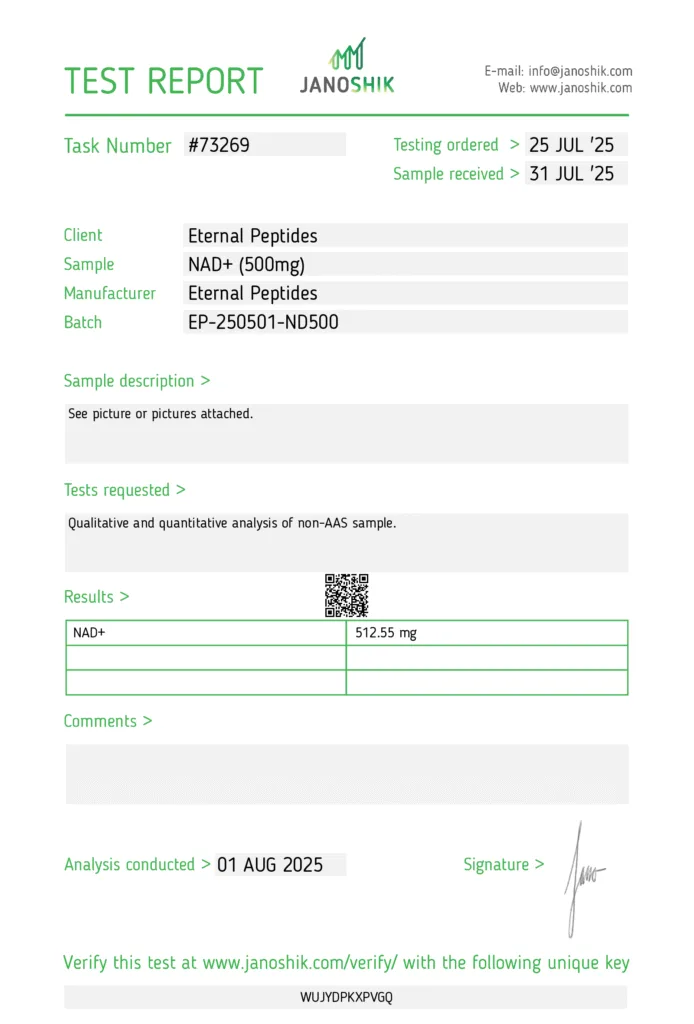
Batch: EP-250501-ND500
Handling & Storage Guidelines
NAD⁺ is highly hygroscopic and sensitive to moisture. It is critical to store vials in a cool, dry environment to maintain stability. Unopened vials are typically stored at 2–8 °C (36–46 °F) and protected from light and moisture. For longer-term storage, freezing at –20 °C (–4 °F) is preferred unless otherwise specified.
If reconstitution is required, dissolve the lyophilized material using bacteriostatic water or an appropriate laboratory buffer in accordance with institutional protocols. You can order bacteriostatic water along with your NAD⁺ for convenience and assured quality.
Prepare solutions under controlled conditions to minimize contamination. Aliquot reconstituted solutions into smaller volumes to avoid repeated freeze–thaw cycles, which may compromise compound integrity.
Short-term working solutions are generally stored at 2–8 °C (36–46 °F) and used promptly, while long-term solutions are typically stored frozen. Standard laboratory safety practices and institutional biosafety guidelines should be followed at all times.
COA / Quality Assurance
Eternal Peptides provides Certificates of Analysis (COAs) for every NAD⁺ product lot, ensuring transparency and batch-level verification. COAs typically document compound identity confirmed by HPLC and/or mass spectrometry, purity analysis, and storage recommendations specific to each lot.
Where applicable, additional testing such as sterility and endotoxin assessment is also included.
All analytical testing is conducted through independent third-party laboratories, such as Janoshik, to support reliable and reproducible research use. Each COA is lot-specific and fully traceable, with unique batch identifiers that align with product labeling. Find COAs on our Lab Tests page, or ask for more information from our support team.
Legal / Regulatory Disclaimer
Eternal Peptides supplies NAD⁺ strictly for laboratory research use only. It is not approved for human or veterinary use, clinical administration, therapeutic applications, or diagnostic procedures. The safety and efficacy of NAD⁺ in humans have not been established.
As the purchaser, you are responsible for ensuring compliance with all applicable local, state, and federal laws, as well as institutional biosafety policies and research-use regulations.
Any misrepresentation of intended use or failure to adhere to regulatory requirements may result in legal or regulatory consequences.
Scientific References
- Covarrubias AJ, Perrone R, Grozio A, Verdin E. NAD+ metabolism and its roles in cellular processes during ageing. Nat Rev Mol Cell Biol. 2021 Feb;22(2):119-141.
https://pmc.ncbi.nlm.nih.gov/articles/PMC7963035/
- Yusri K, Jose S, Vermeulen KS, Tan TCM, Sorrentino V. The role of NAD+ metabolism and its modulation of mitochondria in aging and disease. NPJ Metab Health Dis. 2025 Jun 18;3(1):26.
https://pmc.ncbi.nlm.nih.gov/articles/PMC12177089/
- Murata MM, Kong X, Moncada E, Chen Y, Imamura H, Wang P, Berns MW, Yokomori K, Digman MA. NAD+ consumption by PARP1 in response to DNA damage triggers metabolic shift critical for damaged cell survival. Mol Biol Cell. 2019 Sep 15;30(20):2584-2597.
https://pmc.ncbi.nlm.nih.gov/articles/PMC6740200/
About the Author:
Dr. Sony Sherpa, MBBS, MD
is a board-certified clinician with a background in emergency medicine and clinical practice. She specializes in medical research analysis, ensuring that product information is grounded in evidence-based medicine and strictly adheres to the latest scientific standards in peptide research and recovery.
Related products
-
Tesamorelin (10mg)
$100.00Original price was: $100.00.$89.99Current price is: $89.99. Purchase & earn 90 points!Add to cart -
IGF-1 LR3 (1mg)
$130.00Original price was: $130.00.$104.99Current price is: $104.99. Purchase & earn 105 points!Add to cart -
CJC 1295 + Ipamorelin (No DAC) (5mg/5mg)
$90.00Original price was: $90.00.$84.99Current price is: $84.99. Purchase & earn 85 points!Add to cart -
Semax (10mg)
$60.00Original price was: $60.00.$54.99Current price is: $54.99. Purchase & earn 55 points!Add to cart